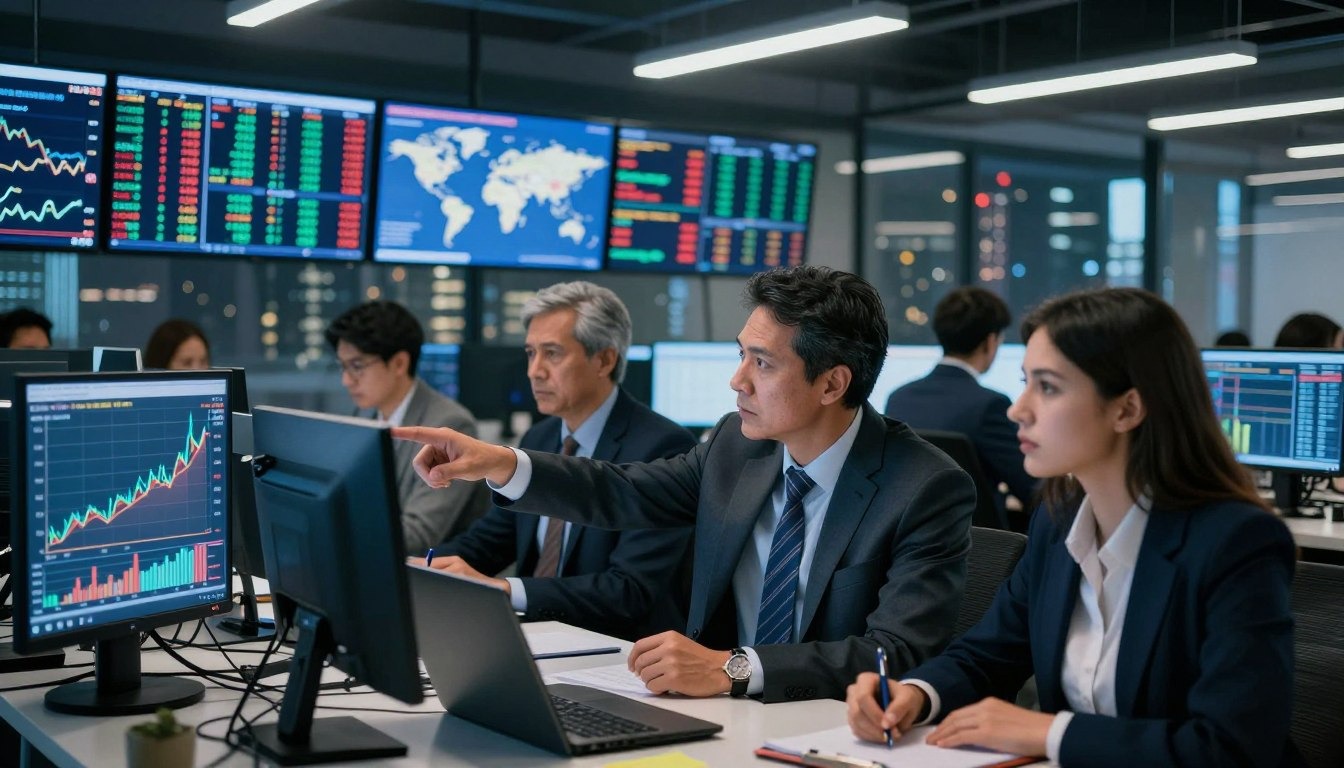
Global Markets on Edge as Investors Watch Inflation and Geopolitical Risks
We see a lot of worry in international financial centers right now. Global markets on edge as investors watch inflation and geopolitical risks are happening live. This makes us think differently about our investments.
Prices keep going up, and global tensions are high. It’s tough for traders. Knowing about these big issues is key to handling today’s ups and downs. Market participants remain on high alert as they adjust to changing times.
Global economic uncertainty
We look into how these big factors affect trading every day. We also talk about how they shape plans for the future. Handling global economic uncertainty needs careful and informed thinking.
Key Takeaways
- Inflationary pressures continue to drive significant volatility in major asset classes.
- Geopolitical tensions are forcing investors to re-evaluate their risk exposure.
- Market participants are prioritizing liquidity to navigate unpredictable price swings.
- Strategic asset allocation is becoming more vital than ever for long-term success.
- We must monitor macro indicators closely to anticipate potential shifts in sentiment.
Current State of Global Economic Uncertainty
Today’s markets are marked by global economic uncertainty. This forces a complete overhaul of old investment plans. The current scene is not just a short-term blip but a lasting change in how money flows across the globe. Investors are now facing a world that feels more and more unpredictable.
The Convergence of Macroeconomic Pressures
Right now, we see a rare mix of high interest rates and slowing growth. This convergence of macroeconomic pressures makes it hard for businesses that need cheap loans to grow. With central banks keeping rates high to fight inflation, borrowing costs stay high for companies and people alike.
This situation makes it tough for businesses to keep profits up while also reducing consumer spending. We see this in the ups and downs of commodity prices and the strain on supply chains. The economic outlook is still unclear due to these ongoing challenges.
Shifting Sentiment Among Institutional Investors
Institutional investors are quickly changing their strategies to cope with this unstable time. They are moving from a risk-on sentiment to a more cautious approach across all major investment areas. Big funds are now focusing on safer investments rather than risky growth stocks.
This change shows a growing worry about the near future of the world economy. By choosing to keep their money safe, these investors are hinting at more trouble ahead. Our research indicates that this cautious stance will likely stick around until the global economic outlook becomes clearer.
Persistent Inflationary Pressures in the United States
The American economy is fighting hard to control inflation. Domestic price pressures are a big worry for investors around the world. This makes global markets on edge as investors watch inflation and geopolitical risks closely.
Consumer Price Index Trends and Federal Reserve Policy
Recent Consumer Price Index (CPI) reports guide the Federal Reserve. When these numbers are higher than expected, the Fed must rethink their interest rate trajectories. This often means a more strict approach from central banks.
This constant need to adjust based on data creates a lot of uncertainty. The Federal Reserve has to find a balance between keeping prices stable and not slowing down the economy too much. Market participants are constantly adjusting their portfolios with each new economic data release.
The Impact of Sticky Service Sector Costs
A big challenge is the sticky service sector costs. These costs, like housing, insurance, and medical care, stay high for a long time. This makes it hard for overall inflation to drop to the target level.
These issues are not just local problems. They affect the global market, where global markets on edge as investors watch inflation and geopolitical risks play a big role. Until these costs start to fall, achieving full price stability is uncertain.
Geopolitical Flashpoints and Market Sensitivity
Geopolitical events now control the flow of global financial markets. Investors see geopolitical sensitivity as a key part of managing risk today. This means we must look beyond just economic data to predict market volatility.
Conflict in the Middle East and Energy Price Volatility
Local conflicts, especially in the Middle East, send shockwaves through global energy markets. Instability in key supply chains can lead to quick price changes in oil and gas. These sudden moves often make market volatility worse, putting portfolios at risk.
Global energy systems are so connected that small problems can cause big issues. Investors need to stay alert, as energy price changes often signal broader economic trouble. Protecting capital in this setting requires understanding how local issues affect global costs.
Ongoing Trade Tensions Between Major Global Powers
Trade disputes between big economies also play a big role. These issues lead to protectionist policies that mess with international trade and make long-term planning hard. This uncertainty can slow down global growth.
The effects of trade tensions go beyond just tariffs. They change how supply chains work and make companies rethink their global presence. Watching these trends helps us see the risks shaping today’s investment world.
The Role of Central Banks in Stabilizing Financial Instability
Central banks are the first line of defense against financial instability. They step in when markets get too stressed. Their quick actions can stop small issues from becoming big problems.
Interest Rate Trajectories and Forward Guidance
Central banks use forward guidance to guide investors. By sharing their plans for interest rates, they reduce uncertainty. This helps businesses and families plan better.
Clear communication is key to managing market expectations. When the Federal Reserve sets a clear path, it avoids sudden sell-offs. Keeping the message consistent is crucial during volatile times.
- Predictability: Clear signals help stabilize long-term borrowing costs.
- Credibility: Consistent actions build trust with global market participants.
- Flexibility: Authorities retain the ability to pivot if economic data shifts unexpectedly.
Balancing Growth Objectives Against Price Stability
Policymakers have a tough job. They must fight inflation without hurting the economy too much. They need to balance keeping prices stable with supporting growth.
This balance requires understanding financial instability risks well. Every decision affects the economy. Central banks aim for long-term stability to support future growth.
“The primary goal of monetary policy is to foster a stable economic environment that supports maximum employment and price stability.”
Federal Reserve Policy Framework
Central banks’ success depends on their ability to adapt. They must watch data closely to keep their policies right. Through careful management, they aim to keep the economy stable amidst financial instability.
Market Volatility and the Search for Safe Havens
When financial markets get shaky, we tend to change how we handle our money. We move away from risky investments and look for safer ones. This is because the world’s economy can be very unpredictable.
Capital Flight to Gold and Government Bonds
When market volatility spikes, people usually put their money into safe places. Gold is a top pick because it’s a solid value that doesn’t rely on government decisions. Government bonds are also popular for their role in a stable investment plan.
“In times of crisis, the primary goal of the investor is not the return on capital, but the return of capital.”
— Anonymous
Here’s how this shift happens. As people become more cautious, they put more money into:
- Physical gold and gold-backed exchange-traded funds.
- Short-term U.S. Treasury bills.
- High-quality sovereign debt from stable economies.
Equity Market Fluctuations and Sector Rotation
There’s also a shift in the stock market. People move away from stocks that need a strong economy to do well. Instead, they focus on sectors that offer consistent dividends and steady earnings, no matter what the economy does.
This change is a direct response to financial uncertainty. By choosing companies in utilities, healthcare, and consumer staples, investors try to protect their money from big drops. This strategy helps keep a balanced portfolio in a changing world.
Recession Risk and Economic Indicators
We need to look closely at the data that shows our economic outlook. This helps us understand if there’s a chance of a recession risk. By watching certain numbers, we can spot signs that often mean big changes in money matters.
Analyzing Yield Curve Inversions and Manufacturing Data
The yield curve is key for investors to guess future growth. When short-term rates are higher than long-term rates, it’s called an inversion. This has often warned us about the economy’s future.
“The yield curve is not a crystal ball, but it remains one of the most closely watched barometers for predicting economic turning points.”
Also, data from factories tells us a lot about the country’s industrial health. If factory output drops, it might mean the economy is slowing down. We watch these economic indicators to see if the slowdown is just a blip or a sign of bigger trouble.
Labor Market Resilience as a Buffer Against Downturns
Even with worries about factory output, the job market is surprisingly strong. This strength helps prevent a small slowdown from turning into a big recession risk.
Several things help keep the job market stable, including:
- Job growth in important service areas.
- Low unemployment rates that help people spend money.
- Wage increases that help families deal with rising prices.
We think the job market’s strength means the economy is solid. These economic indicators show that, even with challenges, the US market can handle shocks.
Challenges Facing Emerging Markets
Developing nations face big challenges to keep their economies stable. They often don’t have as much money as richer countries. This makes them very sensitive to changes in global money flows.
When investors get nervous, these areas feel the biggest effects. This is because they don’t have the same level of financial safety.
Currency Devaluation and Debt Servicing Costs
Many countries are dealing with two big problems: currency devaluation and higher interest rates. When their currency drops in value, it costs more to pay off debts in other currencies. This makes it hard for governments to keep their budgets balanced and still fund important public services.
Trying to handle these debts forces leaders to make tough economic trade-offs. Without enough money to exchange for other currencies, they might not be able to pay their international debts. This shows how fragile their economies are when interest rates are high.
Capital Outflows Driven by Stronger Dollar Dynamics
A strong United States dollar pulls money away from developing countries. When investors choose to invest in dollar-based assets, emerging markets see less money and more ups and downs. This is made worse by ongoing trade tensions that mess up supply chains and hurt export earnings.
This situation creates a cycle where money leaving the country weakens the financial system, leading to more instability. The strong dollar and global tensions leave these countries with few ways to grow. Keeping financial stability is a top priority as they face a lot of uncertainty worldwide.
Government Policies and Fiscal Responses
Policymakers face a big challenge. They must balance quick relief with long-term budget health. Government policies are now focusing on careful budget management. This is to build confidence and fix financial issues.
By watching economic indicators, officials try to see how their actions affect the market. This data-driven method is key for dealing with today’s finance challenges. We think constant monitoring is crucial for lasting growth.
Legislative Efforts to Curb Inflationary Spending
Lawmakers are working hard to cut down on deficit spending. Fiscal restraint is a big topic in budget debates. They aim to reduce demand that drives up prices.
“The path to long-term prosperity requires a firm commitment to fiscal responsibility and the courage to make difficult choices today for a more stable tomorrow.”
These laws are meant to show the markets that the government is serious about keeping prices stable. These steps might cause short-term problems, but they aim to lay the groundwork for future success. We’re keeping an eye on how these policies affect investor mood in different areas.
The Efficacy of Supply-Side Interventions
Authorities are also looking into supply-side actions to increase productivity. They want to lower costs by removing production barriers and encouraging new ideas. Efficiency is the main goal of these plans.
Policies that encourage infrastructure and workforce development could be promising. When businesses run more smoothly, everyone benefits from lower prices and more output. These economic indicators will show if these strategies work against inflation.
The success of these government policies depends on how well they’re carried out and the private sector’s cooperation. We’re cautious but hopeful about these reforms’ ability to stabilize our finances. A balanced strategy seems like the best way forward.
Corporate Earnings and Investor Expectations
Corporate earnings reports are key to understanding the economy’s health. We look at these numbers to see how businesses are doing under financial stress. This helps us understand the strength of the corporate world.
Margin Compression in a High-Cost Environment
Firms are facing tough times with margin compression due to high costs. They must keep profits up while dealing with rising labor and logistics costs. This delicate balancing act forces tough choices on management.
Several factors are causing this issue across many industries:
- Increased raw material costs hurt profits.
- Employees want higher wages to keep up with living costs.
- Supply chain problems add unexpected expenses.
- Less money from consumers affects sales.
Forward-Looking Guidance in Uncertain Times
Management teams are now giving more cautious outlooks to set realistic expectations. This is crucial, especially with recession risk rising in some areas. By setting achievable goals, companies try to keep investors’ trust in tough times.
Big companies also face challenges in emerging markets. These places have unique issues like currency changes and new rules. Companies that handle these well are more likely to survive global downturns.
The clarity of a company’s guidance is a leading indicator of its future strength. We keep an eye on these reports for clues about the global market’s future. Investors who watch these signs closely can better handle the current uncertainty.
Conclusion
Global markets are under close watch as investors deal with inflation and changing world politics. The mix of central bank goals and global stability makes it tough to decide where to put money.
Success in investing means paying close attention to how laws affect the economy. These laws can speed up or slow down recovery and help or hurt local businesses. Keeping an eye on these changes is crucial for managing money well in uncertain times.
Our top advice for keeping your money safe in the long run is to manage assets wisely. Spreading out investments helps protect against big market drops. It’s also important to know how laws affect interest rates and how well companies do financially.
Being alert is your strongest ally in this changing financial world. We recommend watching important economic signs to spot risks early. This way, you can face the challenges of today’s global economy with confidence.
FAQ
Why are international financial centers currently experiencing such high levels of anxiety?
Global markets are on edge due to inflation and geopolitical risks. High interest rates and slowing growth are key factors. Investors are worried about the U.S. inflation and Middle East conflicts, leading to a defensive investment strategy.
How is the Federal Reserve’s policy currently influencing the economic outlook?
The Federal Reserve watches the Consumer Price Index (CPI) closely. They need to balance keeping prices stable and avoiding a severe economic contraction. This balance affects the economic outlook and investor confidence.
What specific geopolitical factors are contributing to market volatility?
Local conflicts, especially those affecting energy, cause immediate market shocks. Trade tensions between the U.S. and China also disrupt global trade. These factors lead to increased market volatility and a flight to safe assets.
Which economic indicators are most critical for assessing the current recession risk?
We focus on yield curve inversions and ISM manufacturing data. These signs often point to recession risk. However, a strong labor market acts as a buffer against a full recession.
Why are emerging markets particularly vulnerable in the current financial climate?
Emerging markets face challenges like currency devaluation and high debt costs. The strong U.S. Dollar leads to capital outflows, worsening financial stability. This makes it hard for these countries to manage their finances.
How are government policies attempting to curb the effects of inflation?
Governments try to fight inflation with policies like reducing spending. They also use supply-side measures to boost productivity and lower costs. The goal is to stabilize the economy and improve fiscal health in the long run.
What role does corporate earnings guidance play in signaling market health?
Companies like Walmart and Target face margin pressure due to high costs. Their cautious guidance on future earnings warns of market turbulence. This indicates ongoing financial instability.













Post Comment