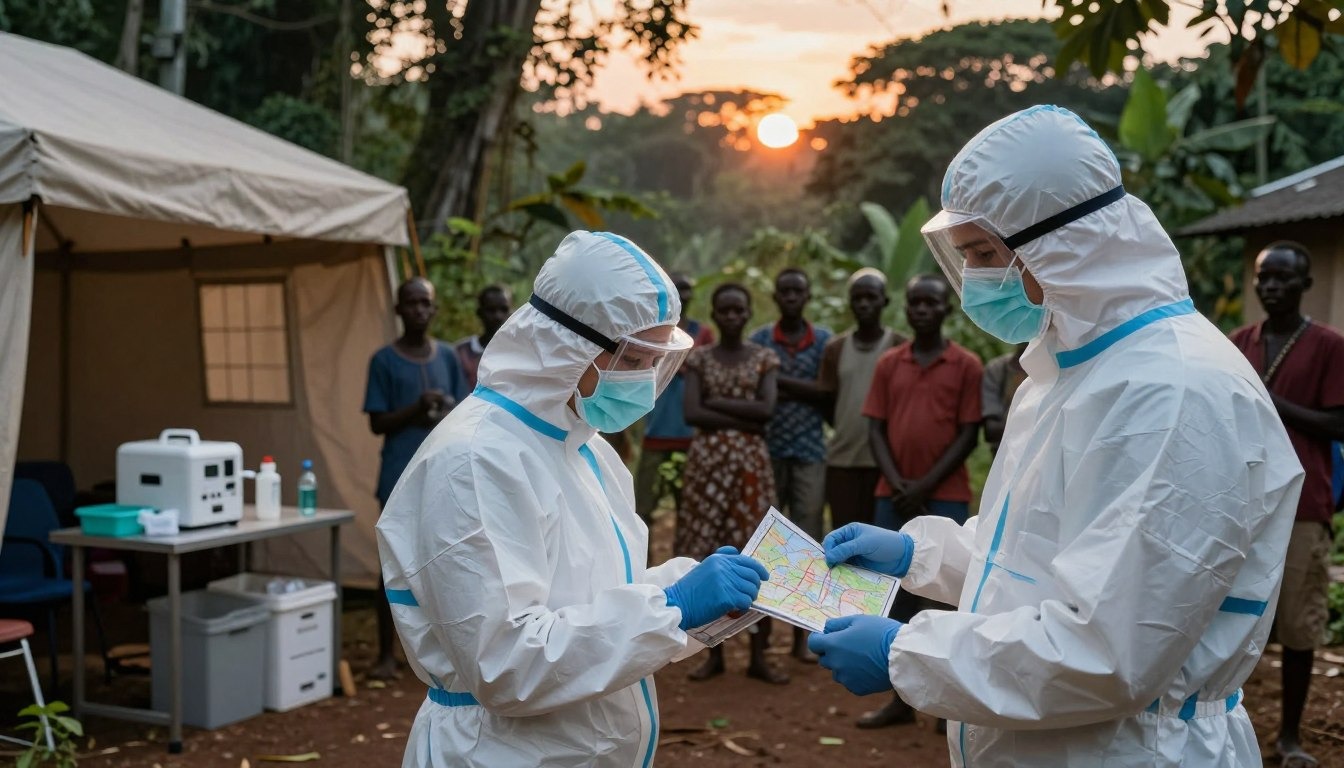
Ebola Outbreak in Central Africa Triggers Global Health Alert
We are watching a situation that needs our quick action. A sudden rise in cases has led to a global health alert. This alert is for the whole world.
The ebola outbreak in central africa triggers global health alert status is now a big worry. Experts everywhere are focusing on ebola concerns in central africa. We must work together to keep people safe from this deadly disease.
Ebola concerns in Central Africa
Global agencies are taking important steps to stop the spread. We think being open and acting fast is key to keeping everyone safe during this tough time.
Key Takeaways
- The current health situation requires a unified international response.
- Medical authorities are working to contain the spread of the pathogen.
- Protecting vulnerable populations is the top priority for global agencies.
- Rapid monitoring is essential to prevent further regional escalation.
- International safety protocols are being updated to address the surge.
Current Status of the Ebola Outbreak in Central Africa
We’ve gathered the latest data to show you the African health crisis clearly. By looking at recent reports, we understand how things have changed. This critical assessment helps us see what’s most urgent in the affected areas.
Timeline of the Initial Detection
The first signs of the ebola outbreak were reports of strange illnesses in remote villages. Local health teams quickly isolated the first cases. This early action was key for our ongoing monitoring.
As time went on, we saw more confirmed cases. Our team keeps track to make sure medical help gets to the right places. Timely reporting is crucial for fighting the virus.
Geographic Spread and Affected Regions
The virus has spread to several provinces. We’re mapping these areas to find out which communities are at the highest risk. This is important for sending mobile clinics and diagnostic tools where they’re needed most.
Now, several rural districts are under close watch because they have limited healthcare access. We’re working to help these vulnerable populations manage the African health crisis. By focusing on these high-risk zones, we hope to slow the ebola outbreak down.
Understanding the Ebola Virus and Its Transmission
Learning about the ebola virus helps us get ready for its challenges. By understanding how it works, we can protect people at risk and help medical teams. This knowledge is key to fighting this infectious disease.
Biological Characteristics of the Pathogen
The virus is a filovirus, known for its thread-like shape. It attacks specific immune cells, weakening the body’s defenses. This quick attack lets the virus spread fast, causing severe inflammation.
This infectious disease is very good at weakening the immune system. Patients often can’t fight it off well. It’s crucial for researchers to study this to find better treatments. We need to keep learning to help patients during this crisis.
Modes of Human-to-Human Transmission
The ebola virus spreads mainly through direct contact with infected bodily fluids. This includes blood, saliva, and vomit. Direct physical contact with these fluids is the main way it spreads.
The virus can also stay alive on surfaces or objects touched by infected fluids. Healthcare workers and family members are at high risk without proper safety and hygiene protocols. By avoiding these contact points, we can lower new infection rates in affected areas.
Global Health Organizations and Their Immediate Response
International cooperation is key to a strong healthcare response during outbreaks. The ebola virus shows how fast global action can change outcomes. It’s crucial for international groups to work together quickly to help the most at-risk areas.
World Health Organization Coordination Efforts
The World Health Organization (WHO) leads in managing the healthcare response globally. They create clear lines of communication. This ensures that local and international groups share data quickly and accurately.
They plan strategically, setting up centers to manage aid distribution. These centers focus on the most infected areas first. This way, they make the most of limited resources. The WHO’s unified approach helps avoid confusion and keeps medical efforts safe.
Deployment of Medical Supplies and Personnel
Getting medical supplies and personnel to the right places quickly is a big challenge. It’s a top goal for international teams. These items are vital for keeping workers safe and treating patients well.
Here are some key items for the initial healthcare response:
- Personal protective equipment (PPE) for worker safety.
- Treatment kits for ebola virus symptoms.
- Mobile labs for quick testing.
- Sanitation supplies for clean treatment centers.
It’s not just about supplies; skilled medical teams are also crucial. International experts team up with local staff. This collaborative effort boosts local crisis management skills and ensures high-quality care.
Healthcare Infrastructure Challenges in the Region
Dealing with outbreaks in remote Central Africa is tough. We face big gaps in our healthcare setup. It’s hard to act fast when we’re up against complex problems.
Our goal is to keep people safe. But, we need a strong healthcare response to do it.
Limitations in Local Diagnostic Capabilities
Rural clinics lack the tools for quick tests. This makes it hard for doctors to confirm cases fast. Without quick tests, we can’t stop the virus from spreading.
Without the right tools, doctors have to guess based on symptoms. This can lead to mistakes. Early detection is key to controlling outbreaks. We need to improve our testing abilities to catch cases early.
Barriers to Accessing Remote Treatment Centers
Getting to treatment centers is also a big problem. Centers are often in cities, far from where outbreaks start. Bad roads and no reliable transport make it hard for people to get help.
This creates a big problem for our healthcare response. Patients often get worse before they can get help. We need to fix these problems to manage infectious diseases better.
Addressing Ebola Concerns in Central Africa Through Surveillance
Tracking the virus is key to tackling ebola concerns in central africa. We use a detailed surveillance plan to spot outbreaks early. This helps us understand how the virus spreads in affected areas.
Contact Tracing and Monitoring Protocols
Contact tracing is at the heart of our fight against ebola concerns in central africa. Our teams work hard to find everyone who has been in contact with someone sick. They then watch these people closely to catch any symptoms early.
This method helps us stop the virus from spreading. We follow several important steps to stay on top of the situation:
- Rapid identification of new clusters through community reporting.
- Daily health checks for all high-risk contacts.
- Immediate quarantine measures for those showing early signs of illness.
- Digital data logging to track the progression of the virus across districts.
Cross-Border Screening and Travel Advisories
We also work to stop the virus from spreading internationally. We team up with nearby countries to set up strict checks at key border crossings. These steps are crucial for keeping everyone safe and controlling the outbreak.
Travel advisories are another important tool in our fight against ebola concerns in central africa. They help guide travelers and transport companies, lowering the risk of the virus spreading. We regularly review these advisories to keep up with the changing situation.
Public Health Crisis Management and Community Engagement
Our strategy for this public health crisis focuses on local engagement and cultural sensitivity. We know that building trust in the communities we help is key. This trust is built through collaboration, making our efforts both respectful and effective.
Overcoming Cultural Barriers to Medical Intervention
In many areas, traditional beliefs and cultural practices can block medical teams. We must understand that misunderstanding these customs can lead to resistance. Instead, we aim to use culturally informed communication in our outreach.
Working with local leaders helps us connect medical needs with community values. This partnership is crucial in handling the challenges of an african health crisis. When we respect local customs, families are more open to medical advice.
Strategies for Public Awareness and Education
Empowering local people is at the heart of our plan to stop the virus spread. We focus on clear, easy-to-understand education on protective measures. Our teams use radio, community meetings, and visual aids to reach everyone.
Building trust is an ongoing effort that needs transparency and consistency. Giving accurate information helps communities feel in charge of their safety during this african health crisis. Our aim is to make sure everyone feels supported and informed, the best way to tackle any public health crisis.
International Collaboration and Emergency Preparedness
International cooperation is key to fighting viral threats. No country can handle a big health crisis alone. Working together, we can share info and resources fast.
This teamwork is crucial for epidemic prevention. When we work together, we protect more people in Central Africa and worldwide.
Funding and Resource Allocation from Global Partners
Money from global groups and donors is crucial now. We follow the money to make sure it helps where it’s needed most quickly. Transparency in resource allocation keeps trust and helps us work better.
Global partners are sending money for tests, protective gear, and medical staff. By combining these, we can fix local healthcare gaps. This helps us tackle immediate needs and build for the future.
Lessons Learned from Previous Epidemic Prevention Efforts
Looking back at past health crises helps us improve. We’ve learned early detection and community trust are as important as medical supplies. These lessons guide our epidemic prevention today.
We’re setting up better surveillance systems based on what we’ve learned. By studying past successes and failures, we can improve our response. This dedication to learning keeps our epidemic prevention strong against future threats.
The Role of Research and Vaccine Development
Dealing with the ebola outbreak needs top-notch research and strong emergency preparedness. Science is our best weapon against the virus. By pushing for medical progress and improving infrastructure, we can shield those at risk.
Current Status of Clinical Trials and Treatments
New trials show hope for better treatments. These aim to stop the virus more efficiently than before. We hope these new treatments will soon be used in hospitals.
“The speed at which we have moved from laboratory discovery to human trials represents a monumental shift in our global response capacity.”
Logistical Hurdles in Vaccine Distribution
Even with these scientific wins, getting vaccines to far-off places is tough. The need for a cold-chain distribution system adds to the challenge. Ensuring vaccines reach those who need them most is a top priority.
Beating these obstacles needs global teamwork and innovative supply chain ideas. We’re striving to make lab successes real in the field. Keeping up the funding is key to stopping the ebola outbreak for good.
Conclusion
To end the public health crisis in Central Africa, we need more than just quick medical help. We must work together for a long time. This way, we can make sure everyone gets the help they need.
It’s important to keep watching for outbreaks and work with the community. Science gives us the tools to fight diseases. These steps are key to stopping epidemics in the future.
We must stay alert and keep helping areas hit by outbreaks until they’re safe again. Our goal is to build strong health systems. This will help us face future dangers together.
Stay updated on the situation through the World Health Organization. Your knowledge helps keep the focus on finding solutions. Together, we can make the world safer by planning ahead and supporting each other.
FAQ
Why has the ebola outbreak in central africa triggers global health alert?
The number of cases has risen sharply, calling for a quick, worldwide effort. The ebola virus is very contagious and deadly. So, the World Health Organization and others have raised the alert level to protect people at risk.
What are the primary ebola concerns in central africa regarding transmission?
Our main worry is how the virus spreads from person to person. This happens through direct contact with infected fluids or contaminated surfaces. We aim to teach local communities about the virus and how to stop it from spreading further.
How are we monitoring the geographic spread of the current african health crisis?
We track the ebola outbreak’s spread from the start. By mapping affected areas, we find out which communities are most at risk. Then, we send our healthcare teams where they’re needed most.
What role does the World Health Organization play in the healthcare response?
The World Health Organization leads the international effort. They manage the delivery of vital medical supplies and treatment kits. Their expertise helps us deploy medical teams to tackle the crisis on the ground.
What are the main infrastructure challenges hindering epidemic prevention?
We face big challenges like limited diagnostic tools and hard-to-reach treatment centers. These issues cause delays in finding and isolating cases. So, improving local healthcare systems is key to our emergency plan.
How do surveillance and contact tracing help contain the ebola virus?
Surveillance is crucial in stopping the outbreak. Through contact tracing and monitoring, we can catch and isolate those exposed. Cross-border screening and travel advisories also help keep the virus in check.
How do we engage with communities to manage this public health crisis?
We know cultural beliefs can sometimes hinder medical help. To tackle the crisis, we use careful communication and education. This builds trust and empowers communities to follow medical advice.
What is the status of vaccine development and distribution for the ebola virus?
Vaccine trials show promise, but distribution is a big challenge. The “cold-chain” needed to keep vaccines stable is a major hurdle. Overcoming these issues is crucial to our ongoing efforts.
How do lessons from past outbreaks inform our current emergency preparedness?
We study past ebola outbreaks to improve our response. By learning from successes and failures, we build a stronger system. This helps us face the current outbreak more effectively.











Post Comment