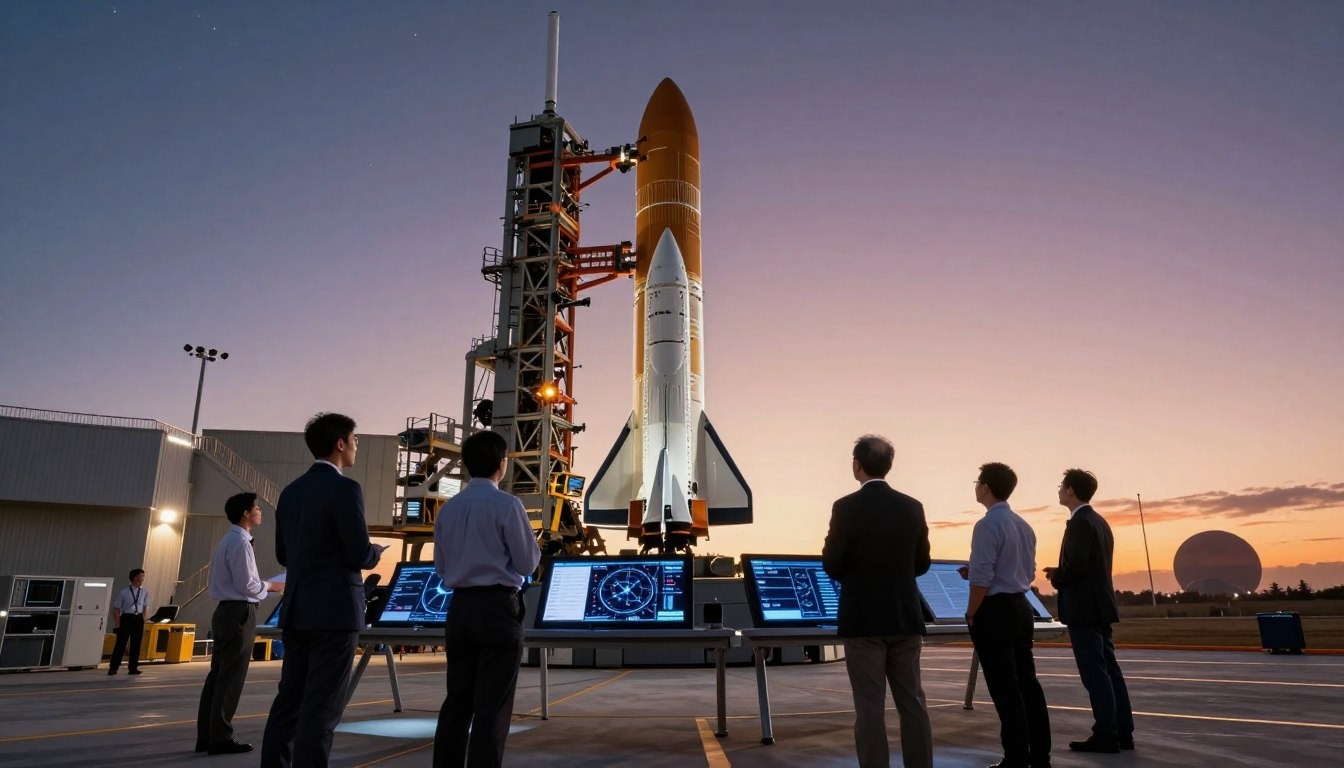
New Moon and Mars Missions Drive Global Space Race
We are seeing a big change in how we explore space. Today, Space Exploration is not just for governments anymore. Private companies are now key players in our journey to the stars.
Space Exploration
This mix of public and private efforts is changing our goals in space. The push for new moon and mars missions is making countries work faster on their tech. This is a big step toward living on other planets.
The race for resources and discoveries is getting fiercer. Our future depends on solving these tough political and engineering problems in the next ten years.
Key Takeaways
- International aerospace competition is reaching unprecedented levels of intensity.
- Private sector involvement is accelerating the pace of modern orbital projects.
- Lunar and Martian objectives are the primary focus for major world powers.
- Technological innovation is being driven by the desire to secure a foothold on celestial bodies.
- Political shifts are reshaping how countries collaborate and compete in the final frontier.
The Resurgence of Lunar Exploration
Our eyes are once again on the Moon, marking a new era in space exploration. After years of quiet, the Moon is now a key spot for science and human living. This focus is crucial for exploring further into our solar system.
The new moon and mars missions drive global space race forward. Countries are racing to improve their tech. They aim to live on the Moon to test systems needed for Mars and beyond.
NASA Artemis Program Milestones
The NASA Artemis program is our biggest push to go back to the Moon. It aims to send the first woman and person of color to the Moon. Key milestones include tests that show the Space Launch System can carry heavy loads.
This program plans to create a lasting Moon base. It includes the Lunar Gateway station in orbit. This will help us study the Moon for longer and prepare for Mars.
China’s Chang’e Lunar Sample Return Success
China is also making big strides with its Chang’e missions. It successfully brought back Moon soil from the far side. This shows China’s skill in robotics and landing technology.
These missions give us important info about the Moon’s geology. As the new moon and mars missions drive global space race, these wins show the competition. This rivalry pushes everyone to innovate faster.
The Strategic Pivot Toward Mars
The moon is still important, but Mars is where we’re really heading in Space Exploration. Agencies are moving from quick moon trips to big plans for Mars. This change brings new challenges in science and logistics.
The new moon and mars missions drive global space race by pushing what’s possible. We’re innovating faster than ever before in history.
NASA Perseverance and Sample Return Challenges
The Perseverance rover is our Martian explorer. It’s gathering samples that could reveal secrets of ancient life. But getting these samples back is a huge engineering challenge.
“The challenge of returning samples from Mars is perhaps the most complex robotic mission ever attempted by humanity.”
We need reliable launch systems to lift off from Mars. This means precise navigation and strong equipment that can handle the planet’s dust.
International Collaboration and Competition in Martian Orbit
Martian orbit is buzzing with activity from around the world. Countries are sending orbiters to study the planet. This mix of science and politics is unique.
In this space, Space Exploration depends on shared data and resources. But the new moon and mars missions drive global space race also. Finding a balance between national pride and science is key for our space future.
Private Sector Catalysts in Space Exploration
We are seeing a big change in how we explore space, thanks to private companies. This change shows how new moon and mars missions are pushing the space race forward. It’s all because of the big investments from the private sector.
SpaceX Starship Development and Heavy Lift Capabilities
SpaceX has changed the game with the Starship launch system. They’re working on making space travel cheaper by using the same rocket over and over again. This is a big step away from the old ways of space travel.
The Starship can carry a lot of cargo and fuel, which is key for going deep into space. As we move forward, being able to send big things into orbit will be crucial for our presence in space.
Blue Origin and the Blue Moon Lander
Blue Origin is making big moves with its Blue Moon lander. This lander is meant to safely and efficiently send things to the moon. It will help with science and maybe even setting up a moon base.
Blue Origin is helping make a moon base a reality. Their work shows how private companies are driving innovation in space. This teamwork will help us explore more of our solar system in the future.
Geopolitical Implications of the New Space Race
Space exploration is now a key area for global influence. The new moon and mars missions drive global space race strategies. This makes nations rethink their long-term diplomatic goals.
We see that Space Exploration is more than just science. It’s crucial for national security and international prestige.
The Artemis Accords and Diplomatic Alliances
The Artemis Accords aim to set norms for peaceful lunar cooperation. They create a shared set of principles for multi-national operations. This ensures Space Exploration is transparent and sustainable for everyone.
These accords have several key goals:
- Promoting the peaceful use of outer space for all humanity.
- Ensuring transparency in scientific data sharing and mission planning.
- Establishing safety zones to prevent harmful interference between lunar bases.
- Committing to the preservation of historic space heritage sites.
Shifting Power Dynamics Between the United States and China
The competitive landscape is shaped by the U.S. and China’s relationship. Both are investing in lunar infrastructure. This rivalry pushes both to speed up their technological advancements.
This competition affects how countries choose partners for missions. The U.S. is building a coalition through the Artemis Accords. China is seeking its own partnerships. This bipolar approach shapes the future of lunar and Martian colonization.
Technological Innovations Fueling Deep Space Travel
We’re seeing a big change in how spacecraft travel through our solar system. As we explore space, we’re moving away from old chemical rockets. This change is key because we need to travel faster and safer to the moon and Mars.
Advancements in Nuclear Thermal Propulsion
Nuclear Thermal Propulsion (NTP) is a big step for space travel. It uses a nuclear reactor to heat liquid hydrogen, creating a lot of thrust efficiently. This means we can get to Mars faster, keeping crew members safer from space radiation.
The main benefits of using nuclear systems include:
- Reduced transit times, making missions shorter.
- More room for life support gear.
- Flexibility in when we can launch to other planets.
- Improved safety for emergency actions in space.
Autonomous Navigation and AI in Spacecraft Operations
Spacecraft need to work on their own more as they go further from Earth. We’re using smart AI for complex tasks, like navigation, without needing Earth’s help. This is important because communication delays make it hard to control spacecraft in real-time.
Now, AI handles everything from changing course to checking systems. Machine learning helps our ships fix problems before they get serious. These changes help keep missions going smoothly, even in the toughest space conditions.
Economic Drivers and the Commercialization of Orbit
Orbital activities are moving from government to private ventures. This change is key for Space Exploration as companies aim to find value in space. By cutting launch costs, they make space travel more accessible.
Mining Lunar Resources and In-Situ Resource Utilization
Harvesting materials from the Moon’s surface is a big leap for space travel. It means no need to carry all fuel from Earth. This method, called In-Situ Resource Utilization (ISRU), cuts down on transport costs.
Key resources include:
- Water ice in shadowed craters, used for rocket fuel.
- Regolith for 3D printing habitats and structures.
- Solar energy for powering mining gear.
This approach makes the new moon and mars missions drive global space race investment in sustainable space bases. The Moon becomes a key stop for further solar system travel.
The Growth of the Low Earth Orbit Economy
Low Earth Orbit (LEO) is becoming a busy place for business and research. With old platforms gone, private companies are building new space stations. These offer unique settings for experiments that can’t be done on Earth.
LEO’s growth brings many benefits:
- Advanced pharmaceutical research in microgravity.
- High-purity fiber optics and alloys production.
- Testing grounds for new satellite tech.
These factors show the new moon and mars missions drive global space race forward in the private sector. As we improve these technologies, space-based business will become more accessible, opening a new era of success.
Human Health and Sustainability in Long-Duration Missions
Keeping humans safe is the biggest challenge as we explore more of the solar system. Space Exploration demands we tackle the physical and mental effects of long space stays. We aim to keep our crew healthy in the harsh conditions of space.
Mitigating Radiation Risks for Mars Transit
The trip to Mars is risky due to cosmic rays and solar particles. These particles can harm our crew’s health over time. Engineers are testing new materials to shield against these dangers.
We’re also looking into using magnetic fields to protect against these particles. This is crucial for the new moon and mars missions drive global space race. Keeping our astronauts safe during the long journey is essential.
Closed-Loop Life Support Systems for Lunar Habitats
Setting up a permanent Moon base means we need to be self-sufficient. We’re working on life support systems that recycle water and oxygen. This circular approach to resource management helps us not rely on Earth for supplies.
These systems use advanced sensors and AI to check air and water quality constantly. By improving these technologies, we’re making sustainable space outposts a reality. Reliability is key in our design, as these systems must work perfectly in the lunar environment. Through Space Exploration, we’re making these goals a reality for future space travelers.
The Role of Emerging Space Nations
We are seeing a big change where new space nations are pushing our limits. Old leaders used to control space, but now, more countries are joining in. These new players are making the Space Exploration race more global than ever.
India’s Chandrayaan Success and Future Ambitions
India has become a key player in space with the Chandrayaan-3 mission. They were the first to land near the moon’s south pole. This shows their exceptional technical precision and smart engineering.
This success is just the start for India. They plan to send more complex missions and even humans to space. Their work inspires other countries to invest in space too.
Experts say this is more than just showing off. It’s about growing our scientific skills to solve Earth’s problems with space technology.
The United Arab Emirates and the Hope Mars Mission
The United Arab Emirates made a big splash with the Hope probe’s Martian arrival. This was a huge step for them, showing they can navigate space well. The UAE’s focus on Martian atmosphere data has given us new insights.
This achievement shows how missions to the moon and Mars bring countries together. It’s key for bringing different views to Space Exploration. As these nations grow, so will our understanding of our solar system.
Regulatory Challenges and Space Traffic Management
The growth of lunar and Martian missions is faster than our old laws. As we explore space, our laws struggle to keep up. The new moon and mars missions drive global space race needs new rules.
Updating the Outer Space Treaty for Modern Realities
The Outer Space Treaty of 1967 was great for the Cold War era. But today, it’s outdated. Now, private companies and new nations are in space, changing the game. We need new laws to keep space peaceful for everyone.
To fix these issues, we need to focus on a few key areas:
- Defining clear property rights for lunar and Martian resources.
- Setting liability standards for private companies.
- Creating clear rules for military actions in space.
- Making sure all countries can explore space.
Managing Orbital Debris and Collision Avoidance
The new moon and mars missions drive global space race have made space crowded. This could be dangerous for future missions. We need to manage space traffic to keep everyone safe.
To keep space safe, we should:
- Make global tracking databases for satellites.
- Standardize ways for spacecraft to avoid collisions.
- Invest in removing old space junk.
- Make sure all new launches dispose of properly.
By solving these problems, we can keep space safe for the future. We must act now to ensure the stars are still within reach.
Conclusion
Humanity is on the brink of a new era in space discovery. The fast pace of innovation shows that the new moon and mars missions are leading the global space race. They are making progress in technology, economy, and politics.
These efforts are changing how we see our place in the universe. They also show what we can achieve together. It’s a time of great change and possibility.
We need to work together and use resources wisely for space exploration to succeed in the long run. By setting common goals, countries can tap into the solar system’s vast potential. This teamwork is crucial for peace and safety in space.
The missions to the new moon and mars will shape the next few decades. We are excited to watch these developments. We encourage you to stay updated as we explore the unknown together. The future of space exploration is for all of us as we aim for the stars.
FAQ
How do the new moon and mars missions drive global space race dynamics in the 21st century?
The new moon and mars missions are key in the 21st century space race. They mix national pride with business chances. Today, both governments and big companies are racing, making it more competitive.Technological achievements, like China’s Chang’e and NASA’s Artemis, show who’s leading. This makes the space race more exciting and important.
What are the primary objectives of the NASA Artemis program compared to China’s lunar missions?
NASA’s Artemis aims to have humans live on the moon and use it as a base for deeper space travel. China’s Chang’e missions focus on sending robots to the moon to collect samples. They’re showing they can work on the moon’s surface and plan to send people soon.
How is the private sector, specifically SpaceX and Blue Origin, accelerating these missions?
SpaceX and Blue Origin are leading the way with new ideas. SpaceX is making a spaceship called Starship that can carry a lot and be reused. This makes going to space cheaper.Blue Origin is working on a lander called Blue Moon. It will help move things around on the moon. Their work shows how important competition is in space.
What are the biggest technological hurdles for reaching the Red Planet?
The biggest challenges are getting to Mars fast and keeping people alive during the trip. New ideas like Nuclear Thermal Propulsion could make the trip shorter.The NASA Perseverance rover is testing ways to move around and make oxygen on Mars. These are key for safe missions to Mars and the moon.
What role do the Artemis Accords play in international space diplomacy?
The Artemis Accords are important for working together in space. Many countries have signed them to follow the US’s lead. But, China’s growing power is changing how we explore space.This means we need better rules for space to keep it peaceful and clear for everyone.
How will astronauts survive the long-duration radiation risks during a Mars transit?
Protecting astronauts from radiation is a big focus. We’re working on better shielding and closed-loop life support systems. These will keep people healthy on long trips.These efforts are crucial for living on other planets.
What is In-Situ Resource Utilization (ISRU) and why is it important for the space economy?
ISRU means using resources found in space, like moon water ice, to make fuel, water, and oxygen. It’s key for making space travel cheaper. By using local resources, we can avoid the high costs of launching everything from Earth.
Which emerging nations are making significant impacts in the current space race?
More countries are joining the space race. India’s Chandrayaan missions have made big strides on the moon’s south pole. The United Arab Emirates has also shown its skills with the Hope Mars Mission.These achievements show the space race is open to everyone, not just a few.
Is the Outer Space Treaty still relevant for modern space activities?
The Outer Space Treaty is still important but needs updates. It helps keep space peaceful but doesn’t cover today’s issues like space junk and private property on the Moon. As more satellites and spacecraft fly, we need better rules to avoid crashes and keep space safe.











Post Comment