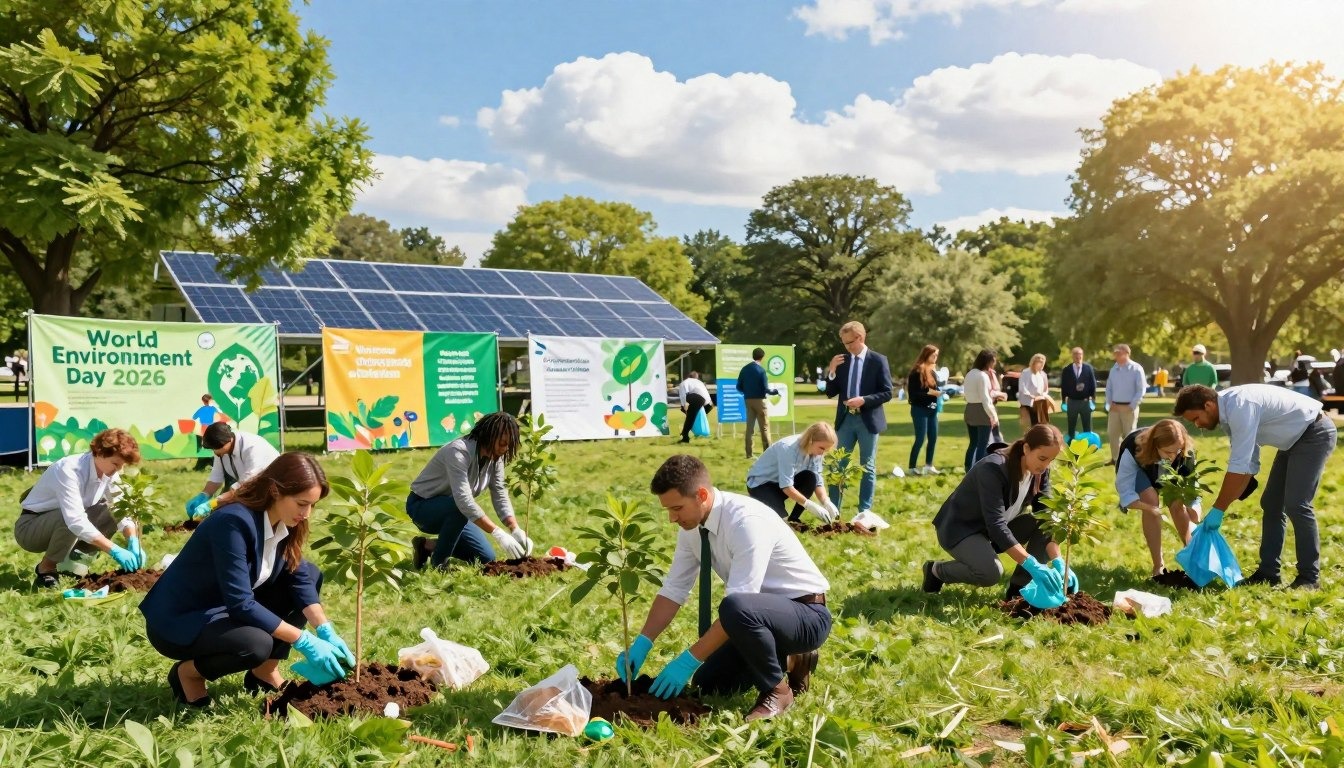
World Environment Day 2026 Sparks Global Action on Climate and Sustainability
We are at a crucial point in history. World Environment Day shines as a key moment for change. This year is more than just a date; it’s a pivotal moment for our planet.
The theme for this year shows how world environment day 2026 sparks global action on climate and sustainability worldwide. We see that urgent ecological issues need quick, global action. Together, we can turn these dangers into lasting fixes.
World Environment Day
Our duty to act has never been clearer. We must go beyond just gestures to make real changes for our planet. This event is the push we need for a better, stronger future for all.
Key Takeaways
- The 2026 event acts as a primary driver for international climate policy shifts.
- Unified cross-border cooperation is essential to address the escalating ecological crisis.
- The focus has transitioned from symbolic awareness to tangible, functional sustainability goals.
- Collective responsibility remains the cornerstone of our global environmental strategy.
- This year serves as a definitive turning point for long-term climate resilience efforts.
The Significance of World Environment Day 2026
World Environment Day 2026 is a critical moment for our planet. It shows how our choices affect the Earth’s health. We must make choices that help our planet.
This day brings nations together to fight climate change. Environmental protection is now a must for our survival. This push for change is key to a better future.
A Milestone for Global Environmental Policy
Our policies have grown to tackle today’s ecological challenges. International agreements are getting stricter, showing we understand our climate better. These policies aim to meet ambitious goals with real actions.
Stronger cooperation is building a more resilient world. We can see how well our laws protect our ecosystems. We need to focus on long-term sustainability, not just quick gains.
Reflecting on Our Collective Progress Since 2025
Looking back, we see both successes and failures. Some countries have cut carbon emissions, but others face challenges. This honest look helps us plan better for the future.
Global teamwork is essential to tackle climate change. By reviewing our past, we can do better. World Environment Day drives this ongoing effort to improve.
Global Mobilization for Climate Action
World Environment Day 2026 is sparking global action on climate and sustainability. People and nations are coming together to tackle the urgent climate crisis. This year, we see real, measurable progress in environmental protection.
International Summits and Diplomatic Pledges
High-level diplomatic summits are key to our environmental strategy. Leaders from big economies are turning big promises into concrete national action plans. These plans include strict carbon reduction targets and investments in green tech.
By linking domestic policies with global goals, countries are working towards a sustainable future. These summits are the base for a truly coordinated global response. They make sure every country sticks to its promises.
Grassroots Movements and Public Participation
While diplomacy sets the stage, grassroots movements push for action. Millions of people are demanding clear, fast action on green policies. This active involvement is key to turning policy into real change.
Local communities are pushing their leaders to act through digital campaigns and public forums. This bottom-up approach makes sure environmental promises are felt in our daily lives. Together, we’re changing the world’s response to climate change through action.
Key Policy Shifts and International Agreements
We are seeing a big change in how big countries deal with environmental conservation. They are moving from voluntary goals to strict, enforceable rules. This change puts the focus on long-term nature health over quick industrial wins.
Legislative Changes in Major Economies
Big global leaders have made new laws to cut down carbon emissions a lot. These laws aim to switch to renewable energy and have stricter penalties for pollution. This makes sure companies are held responsible for their impact on the environment.
These laws also push for better use of land and resources. Governments are encouraging investments in green tech to help environmental conservation locally. This change gives industries the chance to innovate in a responsible way.
The Role of the United Nations in 2026
The United Nations is key in making these big international deals this year. It acts as a neutral middleman, helping countries with different interests come together. Their work is essential for fighting climate change together.
At diplomatic summits, the UN makes sure countries stick to shared goals for sustainability. This teamwork shows that working together with strict rules is the best way to protect our environment. We think this teamwork is crucial for our success.
Advancements in Ecosystem Protection and Biodiversity
We are in a new era of healing our planet’s most delicate places. We use science-based restoration techniques to fix the damage. This is a big step in keeping the Earth healthy.
We now focus on environmental conservation that lasts. We know healthy habitats are key for a stable climate and economy. Our goal is to give future generations a planet full of life and resources.
Restoring Degraded Landscapes
Fixing damaged land is a big job that needs careful planning and knowledge. We’re using new ways to make soil healthy and bring back native plants. These efforts help protect ecosystems and capture carbon.
Our landscape restoration includes several key strategies:
- Large-scale reforestation efforts using native tree species.
- Implementation of regenerative agricultural practices to improve soil quality.
- Rewilding programs that reintroduce keystone species to balance local food webs.
- Water management systems designed to restore natural wetlands and aquifers.
Protecting Endangered Species Through New Reserves
New protected reserves are key for biodiversity preservation. They give endangered species the space to recover and thrive. These areas are important for wildlife to move safely in changing environments.
We think strategic land management is crucial to stop more species from disappearing. Our main goals are:
- Expanding protected areas to cover diverse ecological zones.
- Creating wildlife corridors to connect fragmented habitats.
- Monitoring population health through advanced satellite and sensor technology.
- Collaborating with local communities to ensure sustainable land use practices.
These reserves are more than just maps; they are living laboratories for conservation. By protecting these areas, we keep the complex interactions that support biodiversity. We’re committed to growing these efforts to protect all species and make our planet resilient.
Corporate Responsibility and Green Initiatives
We’re seeing a big change in how companies deal with the environment. Businesses in the United States are starting to use green initiatives. They do this to meet new rules and to please people who care about the planet. This change shows a move away from old ways that didn’t think about the planet.
Transitioning to Circular Economy Models
Many big companies are moving to circular economy models. They want to use resources better. Instead of making things and then throwing them away, they focus on making things last longer and recycling.
This change helps us live more sustainably. When companies think about the whole life of a product, it helps us make smarter choices. This is becoming more common as companies see they can be successful without harming the environment.
Reducing Carbon Footprints in Global Supply Chains
Companies are also looking at their global supply chains. They want to cut down on carbon emissions. By improving how they ship things and choosing eco-friendly suppliers, they’re setting new standards for sustainable living.
These proactive measures help production fit with global climate goals. As we keep pushing companies to do better, their efforts to go green will be key to a better future. The idea of growing without harming the environment is becoming a new norm.
Community-Led Sustainable Living Practices
Change often starts in our own backyards and neighborhoods. Sustainable living works best when we all work together. By joining forces, we can make our areas better for the environment.
Urban Gardening and Local Food Systems
In the U.S., people are turning empty lots and rooftops into gardens. These gardens are more than pretty; they give us fresh, organic food. This cuts down on the need for food to travel far, which helps the planet.
Local food systems, like CSAs, link families with nearby farmers. This helps our food stay local and supports our economy. Buying local food is a way to live more sustainably and care for our planet.
Reducing Waste in Household Consumption
Handling our waste is key to being eco-friendly. Families are now composting and choosing products with less packaging. These small steps stop a lot of waste from ending up in landfills.
We can do more by thinking about what we buy and how we use things. Here are some tips to make your home more efficient:
- Composting: Make soil for your garden from kitchen scraps.
- Bulk Buying: Buy staples in reusable containers to cut down on plastic.
- Repair Culture: Fix things instead of throwing them away.
- Energy Awareness: Use LED lights and smart thermostats to save energy.
By making these choices, we show that we can make a difference. Every choice we make helps create a better world. Together, we can make our homes and communities live in harmony with nature.
Technological Innovations Driving Environmental Sustainability
We are entering a new era where innovation helps our planet. By using advanced tools every day, we can make our industries more sustainable. These modern solutions are key to a better, more efficient future.
Breakthroughs in Renewable Energy Storage
Stable power grids are crucial for clean energy. We’re seeing big breakthroughs in battery tech. These advancements help store energy from wind and solar sources better.
These systems keep clean power flowing, even when the sun or wind isn’t. This reduces our need for fossil fuels. It’s a big step towards environmental sustainability. As we grow these technologies, we build a strong, green infrastructure.
AI-Driven Solutions for Resource Management
Artificial intelligence is changing how we watch over our natural resources. We use smart algorithms to track water, energy, and land health in real time. These AI-driven insights help us make smart choices to cut waste and boost efficiency.
These tools also help protect our biodiversity. They spot threats to habitats early on. By using satellite images and sensor data, we can save endangered species more effectively. These tech advancements give us the tools to protect our planet for generations to come.
Addressing Climate Change Awareness in the United States
American communities are changing how they view the environment. Climate change awareness is now a big part of our talks. This shows how urgent the environmental crisis is.
This change is more than just talking about it. It’s about how we see our role in saving the planet. By learning more, we can make choices that help our future.
Educational Programs and Public Outreach
Now, people from all walks of life are learning about the environment. Outreach campaigns make complex science easy to understand. This way, everyone gets the message.
Groups like local environmental non-profits are making a big difference. They teach in ways that fit each community’s needs. This has helped more people, especially the young and city dwellers, understand climate change awareness.
State-Level Initiatives for Clean Energy
There’s also a big push for clean energy at the state level. Many states are pushing for green initiatives to use more renewable energy.
These efforts help us move away from fossil fuels. They encourage using solar and wind power. This creates jobs and cuts down our carbon emissions.
We see these efforts as key to fighting climate change worldwide. Local actions show us we can have a green future.
Challenges Facing Global Environmental Conservation
We need to face the tough realities that block our progress toward global sustainability. Despite progress in climate change awareness, the journey ahead is tough. We must tackle these big challenges to make sure our efforts bring real change.
Economic Barriers to Green Transitions
Money is a big problem for many countries trying to switch to green energy. Poor countries find it hard to get the money needed for big changes. Without help from others, going green is too costly.
Several things make this financial challenge hard:
- Green tech costs a lot to start with.
- It’s hard to get cheap loans for green projects.
- Many countries rely on old fossil fuel industries for jobs.
- Creating new ecosystem protection tools is expensive.
Balancing Industrial Growth with Ecological Limits
We always struggle to balance growing industries with our planet’s limits. Old economic plans focus on quick gains, not long-term environmental conservation. This leads to using up natural resources for growth.
To keep moving, we need new ways that respect our planet. True sustainability means linking economic growth with protecting the environment. By making climate change awareness part of business and government plans, we can aim for a better future.
Future Outlook for a Resilient Planet
We are at a key moment where our choices today will shape the planet’s future. The progress made in 2026 is crucial for what’s next. Our commitment to change must remain steadfast as we move from initial steps to lasting change.
Setting Targets for the Next Decade
To ensure a stable future, we need clear, measurable goals. These should focus on environmental sustainability. We aim to restore natural habitats and move towards clean energy.
By making sustainable living a part of our daily lives, we can lessen our impact on the environment.
Biodiversity preservation is key to our decade-long plan. Protecting diverse ecosystems is vital for human life. We are responsible for safeguarding the intricate web of life that supports our economy and health.
The Importance of Sustained Global Cooperation
The climate crisis is a global problem needing a united effort. No country can solve it alone, making sustained global cooperation essential. We must keep sharing knowledge and technology worldwide.
Keeping climate change awareness high is crucial. When people stay informed, they push for change. Our future depends on our ability to maintain the momentum from 2026 and make our vision a reality.
Conclusion
The world is changing for the better when we work together. World Environment Day 2026 reminds us that our choices matter. We need to keep up the good work for lasting results.
Real progress comes from protecting our ecosystems everywhere. Supporting green efforts locally and globally helps everyone. These actions pave the way for a cleaner, safer world.
We urge everyone to keep up the fight for a sustainable environment. Even small changes can make a big difference. Let’s aim for a future where nature and human progress go hand in hand.
FAQ
Why is World Environment Day 2026 considered a turning point for international climate policy?
World Environment Day 2026 is a key moment for global action on climate and sustainability. It moves beyond just gestures. It’s a time when world leaders’ promises are turned into real actions and laws in big countries to fight the climate crisis.
What progress have we made in environmental conservation since 2025?
Since 2025, we’ve learned from past climate promises to improve our efforts. The United Nations is now helping countries make their laws match new environmental standards. This ensures a stable and predictable climate for the future.
How are we addressing the global decline in biodiversity?
We’re focusing on saving biodiversity by creating new protected areas and fixing damaged ones. We’re using science to restore habitats and stop habitat loss. This helps protect ecosystems for the long term.
What role does corporate responsibility play in achieving environmental sustainability?
Big brands like Unilever and Apple are changing to circular economy models. They’re working to use resources better and cut down on carbon emissions in their supply chains. This shows that businesses can be successful while protecting the environment.
How can local communities contribute to sustainable living?
Small actions can make a big difference. Community projects like urban gardens and local food systems are helping. Changing how we consume at home also plays a big role in reducing waste.
Which technological innovations are most critical for our resilient future?
Advances in renewable energy storage, like Tesla’s work, are key for a clean energy grid. AI is also helping manage resources better. These technologies are crucial for updating our infrastructure and protecting our ecosystems.
How is the United States improving climate change awareness and action?
In the U.S., education and public efforts are boosting climate awareness. States like California and New York are leading with clean energy plans. These efforts help the country move towards a greener economy.
What are the biggest challenges currently facing global conservation efforts?
Economic hurdles are big obstacles for green transitions, especially for poor countries. Finding a balance between growth and protecting the Earth is hard. We need global cooperation and shared resources to overcome these challenges.
What is the long-term outlook for the planet following the events of 2026?
Our future depends on keeping the momentum from 2026 going. We’re setting big goals for the next ten years to make sustainable living a part of everyday life. With continued global cooperation, we can build a resilient and healthy planet.












Post Comment