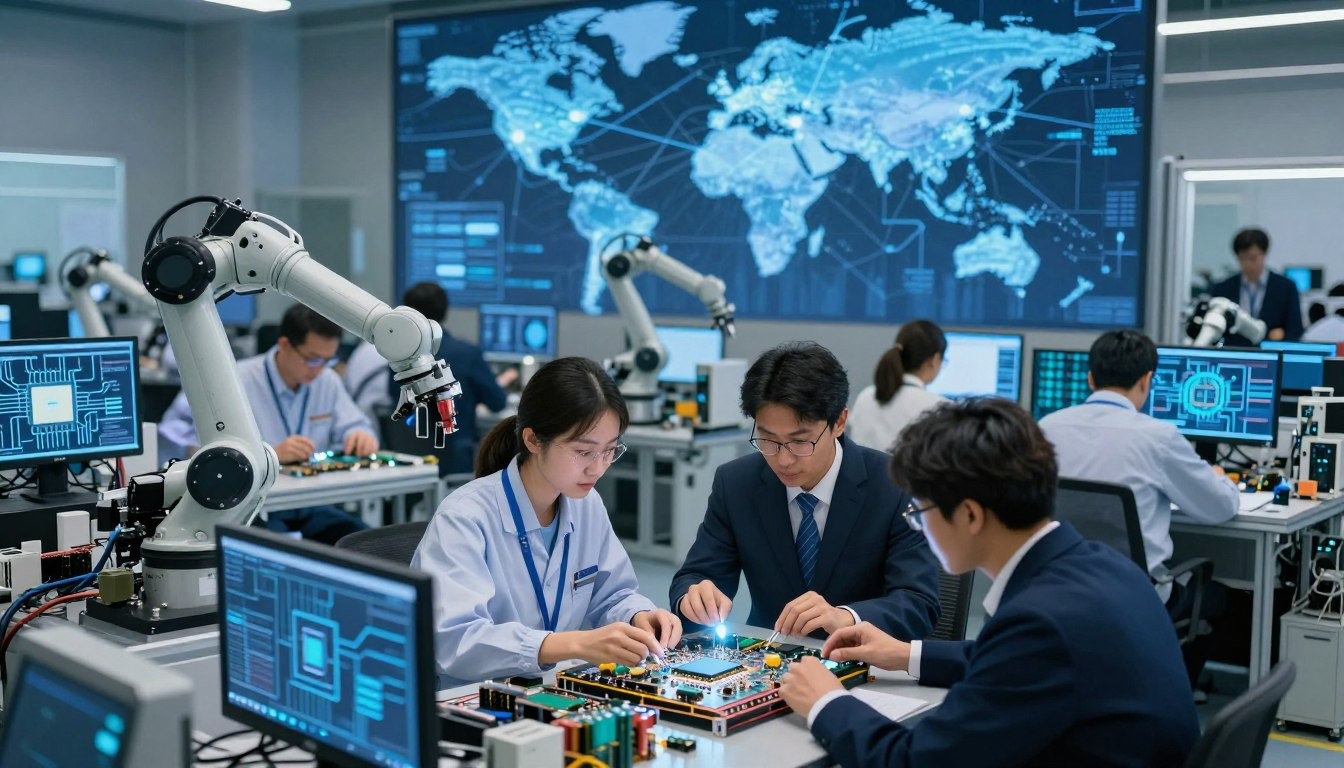
Global Chip Race Heats Up as Nations Seek Tech Independence
We are seeing a big change in how the world makes hardware. The global chip race heats up as nations seek tech independence to protect their future and security.
For years, we depended on complex, fragile international supply chains for our digital lives. Now, we see that this dependence is risky during trade disputes or logistical failures.
Semiconductors
By focusing on making things at home, we aim to shield our economy from global ups and downs. Semiconductors have become crucial in modern politics.
Investing in local production keeps us competitive in a fast-changing world. These semiconductors are key for everything from smartphones to advanced defense systems.
Key Takeaways
- Nations are aggressively pursuing domestic production to reduce reliance on foreign suppliers.
- Supply chain fragility has forced a rethink of global trade strategies.
- Economic insulation is a primary driver for current government investments in hardware.
- Modern geopolitical power is increasingly tied to the ability to manufacture advanced technology.
- Domestic manufacturing helps mitigate risks from international trade disputes and logistical bottlenecks.
The Strategic Shift in Semiconductor Manufacturing
The tech world is changing fast, moving from global to local. Nations are now focusing on making things themselves, not just relying on others. This big change is a critical turning point for the world’s economy.
The Transition from Globalized Supply Chains to Sovereign Tech
For years, tech was made far away to save money. But, recent problems have shown the inherent risks of this. Now, we see the need to make things closer to home.
By making semiconductor manufacturing at home, we avoid risks from outside. This move is not just about money. It’s about keeping our important stuff safe and under our control. Having our own tech helps us deal with a world that’s getting more unpredictable.
Why Microchips Are the New Oil of the 21st Century
In today’s world, microchips are key for everything. They power cars, help AI grow, and more. Like oil in the past, they drive our digital lives.
These chips are super important. They’re in everything from gadgets to defense systems. Their availability is a national priority. We need to make them as important as oil was before.
Investing in semiconductor manufacturing is key for our future. By making our own chips, we keep our tech safe from outside problems. This focus on making things at home is crucial for our success.
The Current State of the Global Semiconductor Market
We are at a turning point in getting the world’s essential electronic parts. The semiconductor market is key to our digital world, but it’s mostly made in one place.
This focus on a few areas makes things tough for tech giants. We need to see how this affects the whole semiconductor industry.
Dominance of East Asian Foundries
Most advanced semiconductors are made in East Asia. Big names like TSMC and Samsung lead in making high-end chips.
This focus comes from years of investment. These places have the unmatched technical expertise for making tiny, efficient transistors.
Vulnerabilities Exposed by Recent Supply Chain Disruptions
Recent global issues showed how weak our supply chain is. When shipping got stuck, the semiconductor industry hit a wall. This stopped production in cars and gadgets.
These problems made everyone realize how risky it is. A single problem can cause big trouble for the whole economy.
We need to spread out where semiconductors are made. A stronger semiconductor market means making parts in more places. This way, we can avoid big problems in the future.
Legislative Milestones in the United States
We are seeing a big change in how the government supports American manufacturing. They want to make our country less dependent on foreign goods. This move is key to keeping us competitive in today’s digital world.
Analyzing the Impact of the CHIPS and Science Act
The CHIPS and Science Act is at the heart of this new plan. It offers significant financial incentives to bring private money into our country. This money helps companies build advanced factories here.
This law makes it easier for new ideas to grow. We think it will create a self-sustaining ecosystem that can handle changes in the market. This way, we keep control over the basics of our technology.
Incentivizing Domestic Semiconductor Materials Production
A big part of this effort is making high-quality semiconductor materials. Without these, even the best factories can’t work fully. Our policies focus on growing this important part of our supply chain.
By supporting specialized chemical and substrate manufacturing, we’re making our supply chain stronger. This ensures we have the semiconductor materials we need. It’s a step towards a more independent and strong technological future for the U.S.
The Role of Integrated Circuits in National Security
In today’s digital world, a nation’s strength is tied to its semiconductor technology. These small parts are key to our defense, powering everything from communication to intelligence.
Without access to top-notch integrated circuits, we lose our tech edge fast. Keeping a steady flow of these parts is crucial for our safety and freedom.
Defense Applications and Advanced Computing
Modern war needs fast data sharing across big networks. Advanced computing helps our troops make quick decisions, giving them an edge.
Our defense systems need smart hardware to work well. Here are some key uses:
- Radar and Surveillance: Fast processing to spot stealthy threats.
- Secure Communications: Safe networks that keep out spies.
- Autonomous Systems: AI-powered drones and cars that need lots of semiconductors.
- Precision Guidance: Systems that hit targets with high accuracy, even in tough conditions.
Protecting Critical Infrastructure from Foreign Tech Dependency
Dependence on foreign integrated circuits is risky. It opens doors for enemies to sneak in through backdoors or disrupt our supply chains.
To keep our vital systems safe, like power and water, we need a clear and secure supply chain. Making semiconductors at home reduces the chance of foreign tampering.
“The ability to manufacture the most advanced chips domestically is a matter of national security, not just economic policy.”
— Defense Industry Analyst
By focusing on making chips at home, we keep our defense strong. We’re investing in our nation’s safety and future by controlling our own hardware.
Major Players Reshaping Semiconductor Technology
We are at a critical moment as big companies change the future of semiconductor technology. They are investing heavily to make the next computing power at home. This is key for keeping our economic and tech lead.
Intel and the Expansion of Domestic Fabrication Facilities
Intel is leading this change by growing its domestic fabrication. It’s building top-notch facilities to boost chip production. This move cuts down on overseas reliance and strengthens our supply chain.
The new places are made for the complex needs of today’s chips. More domestic capacity means faster innovation and better quality. We see these investments as crucial for a strong national tech base.
Collaborations Between NVIDIA and US-Based Foundries
The industry also depends on strong partnerships to stay ahead. NVIDIA is teaming up with US foundries for advanced processors. These partnerships are essential for meeting the growing need for AI and high-performance computing.
Working with domestic partners, NVIDIA makes sure its top designs become reliable hardware. This teamwork is driving progress in semiconductor technology. It helps us stay competitive in a fast-changing world where speed and reliability matter.
Geopolitical Tensions and Export Controls
We’re seeing big changes in how countries handle advanced technology. As competition grows, governments are using trade policy to protect their security. This move is different from the open-market ideas of the last decade.
Restricting Access to High-End Semiconductor Devices
Nations are putting strict controls on semiconductor technology exports. They focus on semiconductor devices that can be used for both civilian and military purposes. This way, they try to stop these devices from being used for military goals.
This move shows a big worry about security risks from foreign parts. Policymakers are choosing to control things at home over making things efficient. This makes it hard for companies that depend on global supply chains.
The Diplomatic Fallout of Tech Trade Restrictions
These trade barriers have caused big problems in international relations. We’re seeing a bifurcated tech world, where countries must pick sides. This makes it hard for them to keep their economic freedom.
Experts are still debating the long-term effects of these policies. While they might make countries safer, they could also slow down innovation. The market for semiconductor devices might get more expensive and progress could slow down for everyone.
The European Union and the Quest for Autonomy
The European Union is taking steps to strengthen its chip-making abilities. This move is aimed at reducing the risks of global supply chain problems. The EU wants to protect its industries from outside disruptions.
This effort is not just about making chips. It’s about building a strong digital base for the European economy.
The European Chips Act and Regional Investment
The European Chips Act is at the heart of this plan. It’s a big law that will bring in billions of euros in funding. The goal is to make the EU a bigger player in the chip market by 2030.
This money will go towards building top-notch chip factories in different countries. The EU wants to make its chip industry strong and diverse.
These investments aim to make the EU’s chip industry more resilient. Regional governments are focusing on improving research and testing. They want to attract big companies to set up in the EU.
Balancing Cooperation with Strategic Independence
The EU is walking a fine line in the current world politics. It wants to stay open to international cooperation but also protect its tech interests. This balance is key to keeping trade flowing while keeping sensitive tech safe.
The EU is working to keep its markets open while securing its tech base. By diversifying its partnerships, it aims to manage these competing goals. The ultimate goal is to have the power to act on its own without losing important economic ties.
Technological Hurdles in Advanced Manufacturing
We are at a critical point. The limits of physics and a lack of skilled workers are major challenges. To move forward in the semiconductor industry, we must tackle these obstacles. We aim for smaller, more efficient chips, but it’s not easy.
The Complexity of Next-Generation Lithography
Modern semiconductor manufacturing uses extreme ultraviolet (EUV) lithography. This method prints circuits at the nanometer scale. It requires unprecedented levels of precision.
Even a tiny vibration or impurity can spoil a whole batch of wafers. The cost of this research and development is huge. Companies spend billions on special machines that push the limits of physics.
An industry expert said:
“The transition to next-generation lithography is not merely an incremental step; it is a fundamental reimagining of how we manipulate matter at the atomic level.”
Addressing the Talent Gap in the Semiconductor Industry
The semiconductor industry also faces a talent shortage. There aren’t enough skilled engineers and technicians for new facilities.
To solve this, we’re seeing more collaborative educational initiatives. Universities and companies are working together. They create special training programs for high-tech production.
- Developing specialized apprenticeship programs for technicians.
- Increasing funding for STEM education at the university level.
- Creating industry-led certification paths for rapid workforce integration.
- Expanding internship opportunities within domestic fabrication plants.
These efforts are crucial for staying competitive. By training the next generation, we keep our semiconductor manufacturing strong. This ensures we can meet future demands.
Economic Implications of Reshoring Production
Reshoring production comes with both challenges and opportunities. The semiconductor industry is changing how it looks at its global presence. This change needs a close look at both the upfront costs and the long-term benefits.
Cost Analysis of Domestic vs. Offshore Fabrication
Setting up advanced plants in the U.S. means big capital expenditure compared to offshore. Labor, rules, and building costs add up. But, these costs are part of a bigger picture of long-term security.
Offshore manufacturing might seem cheaper at first. But, it comes with hidden costs like shipping delays and political risks. The semiconductor market is starting to value stability over just low costs. Local production offers a more stable financial future for tech companies.
Long-Term Market Stability and Price Volatility
Local production helps avoid big price swings seen in recent years. When supply chains are in a few places, any problem can cause huge price jumps. Diversifying production helps avoid these sudden price hikes.
A stronger semiconductor industry has shorter supply chains and quicker responses to demand. The initial investment is big, but the long-term benefits are worth it. By not relying so much on foreign sources, we gain a strategic advantage. This protects businesses and consumers from future surprises.
Environmental and Sustainability Challenges
As we grow our chip-making in the U.S., we face big environmental challenges. The tech world’s fast growth means we must tackle the harm it causes. We know that balancing growth with care for the planet is crucial for the next ten years.
Resource Intensity in Semiconductor Manufacturing
Making semiconductors uses a lot of resources. Huge amounts of clean water are needed to wash silicon wafers and cool machines. Also, semiconductor manufacturing needs a lot of energy, often from the grid, to keep cleanrooms stable.
The industry also uses many chemicals and gases. It’s vital to handle these safely to avoid harming the environment. Making semiconductor devices creates a lot of waste, which needs special treatment to protect the planet.
Developing Greener Processes for Future Microchip Production
We’re working on new ways to make chips that are better for the planet. Companies are using closed-loop water recycling systems to cut down water use. This lets them reuse water many times before treating it.
Switching to green energy is also key. Using wind, solar, or geothermal power to make microchips reduces our carbon footprint. We’re looking into greener chemical alternatives that are safer and easier to clean up.
Our aim is to keep tech progress in line with caring for the environment. As we innovate, making semiconductor devices in a sustainable way will show our success. By choosing cleaner methods, we make sure our use of microchips doesn’t harm our planet.
The Future of Global Tech Alliances
We are seeing a big change in how countries work together on technology. The old days of just looking to make money are over. Now, it’s all about strategic security and trust.
Technology is now seen as a key part of keeping a country stable and its economy strong. It’s not just about making money anymore.
Building Resilient Networks with Allied Nations
There’s a big push to team up with trusted partners for stability. This idea, called friend-shoring, focuses on reliable supply chains over cheap production.
Working with allies helps countries build a safer way to make important parts. They can share research, resources, and defend against supply chain problems together.
These partnerships aim to make innovation more stable. When countries follow the same standards and security rules, they avoid sudden tech problems.
The Potential for a Fragmented Global Tech Ecosystem
But, these alliances might lead to a world divided into different tech groups. As supply chains get more separate, we could see different tech standards.
This could make international trade harder and slow down new tech adoption. If areas use different tech rules, it might cost more and take longer to get new tech.
In the end, the tech world’s future will depend on these partnerships, not just competition. We need to be careful to find the right balance between sovereign tech independence and working together globally.
Conclusion
The global race for tech dominance shows semiconductors are key to our economy and security. Nations are now focusing on keeping their digital systems stable. This is a big change.
Investing in making chips at home is crucial for growth. We need a skilled workforce and support for companies like Intel and NVIDIA. This helps us stay strong in the global market, even when things get tough.
Working together with other countries makes the tech world safer. We’re committed to keeping up with fast changes in the industry. Our goal is to support policies and innovations that will shape the future.
We encourage you to stay updated on microchip production. Your interest helps us share the most critical updates in this field. We’re excited to explore the future of tech together.
FAQ
Why has the global chip race heats up as nations seek tech independence recently?
The global chip race is heating up because countries want to be tech independent. They see the risk in relying on foreign suppliers for key hardware. By making chips at home, they aim to avoid trade disputes and supply chain issues.
Why are microchips often referred to as the “new oil” of the 21st century?
Microchips are called the new oil because they power modern industries. They are crucial for everything from cars to AI. Without them, progress would stop. We’re making chips at home to avoid long-distance supply chain problems.
How does the current dominance of East Asian foundries affect global stability?
East Asian foundries dominate the chip market, creating big risks. Disruptions there can stop production worldwide. We need to spread out chip production to avoid big failures.
What is the significance of the CHIPS and Science Act in the United States?
The CHIPS and Science Act is a big deal for the US. It offers money to bring chip production back home. This policy aims to make the US self-sufficient in chip production.
In what ways do integrated circuits impact national security?
Integrated circuits are key for defense and advanced computing. They power secure communication and radar systems. Having chips made at home is crucial for national security.
Which major players are currently reshaping domestic semiconductor manufacturing?
Companies like Intel are expanding their US chip factories. NVIDIA is teaming up with US foundries for high-end processors. These moves help the US stay competitive in chip technology.
What are the consequences of current export controls on semiconductor devices?
Export controls limit access to advanced chips. They aim to stop the spread of dual-use tech. But, they can also limit innovation and lead to a divided tech world.
How is the European Union pursuing its own technological autonomy?
The EU is investing in the European Chips Act to build a strong chip base. It wants to balance cooperation with its own tech goals, avoiding the US-China tech rivalry.
What are the primary technological hurdles in next-generation semiconductor manufacturing?
Moving to new chip-making tech is very hard and needs a lot of research and talent. We’re working on education to fill the talent gap for advanced manufacturing.
Is reshoring semiconductor production economically sustainable?
Making chips at home costs more upfront but is worth it for stability. It helps avoid price shocks from global supply chain issues. The benefits outweigh the costs in the long run.
How can the industry address the environmental impact of microchip production?
The chip industry uses a lot of resources like water and energy. We’re working on greener methods to grow while protecting the environment. This is a big challenge for the next decade.
What does the future of global tech alliances look like?
The future will have strong networks and partnerships. There’s a risk of a divided tech world. But, working with trusted partners can help create a safer tech development framework.












Post Comment