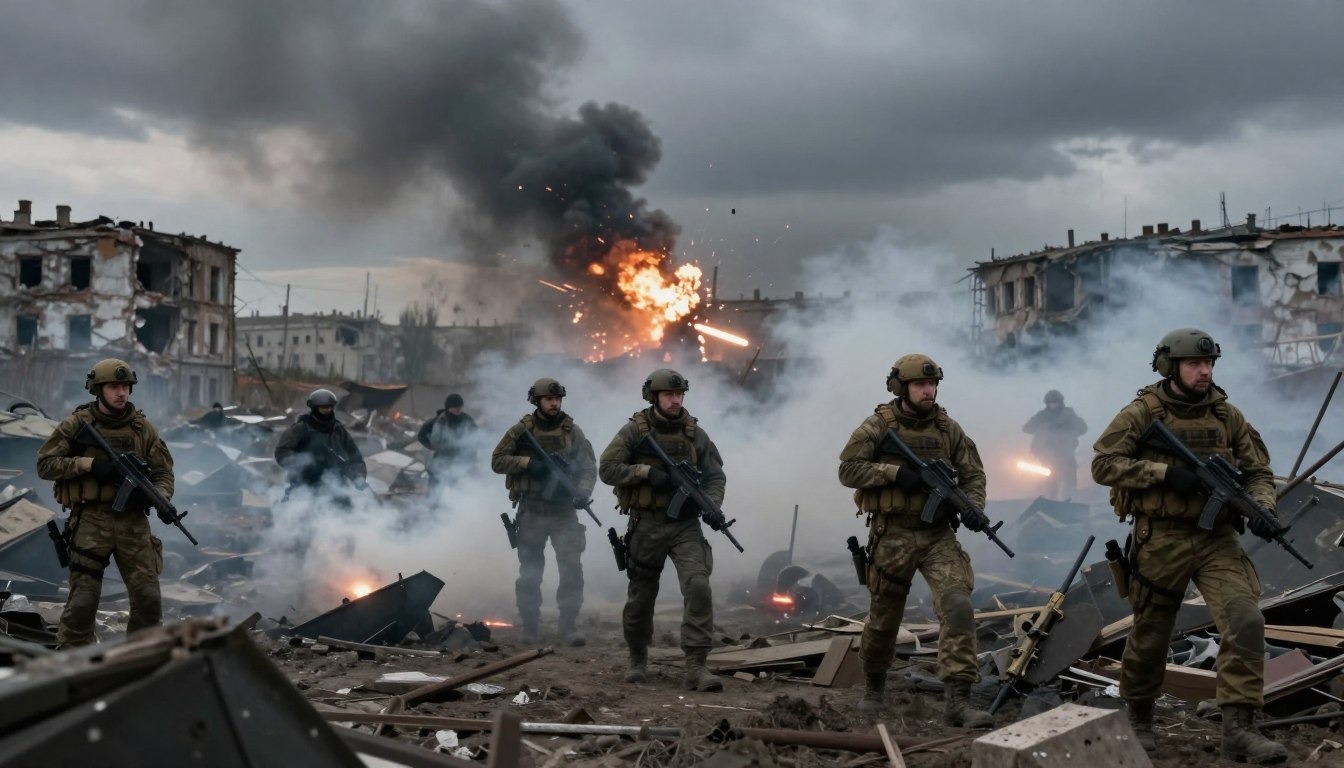
Russia and Ukraine Exchange Fresh Attacks Amid Peace Efforts
The russia–ukraine war is getting worse, even with the world calling for peace. As we follow current events, finding a way out seems very hard.
Both sides have started attacking each other again. This makes it tough for international diplomatic efforts to succeed. These attacks keep the violence going, making peace talks harder.
Russia–Ukraine war
It’s clear that russia and ukraine exchange fresh attacks amid peace efforts. This shows how delicate these talks are. Fighting makes it hard to build trust in these talks. We’re keeping an eye on how these events affect the world.
Key Takeaways
- Recent military escalations have occurred simultaneously with international peace talks.
- The ongoing conflict continues to evolve, creating significant hurdles for global mediators.
- Renewed strikes by both nations have complicated the potential for a lasting ceasefire.
- Diplomatic channels are struggling to gain traction due to the intensity of active combat.
- Understanding these current events is essential for grasping the future of regional stability.
Escalation of Hostilities on the Front Lines
In Eastern Europe, the fighting is getting more intense. Forces are using more resources to hold key areas. This shows a desperate effort to gain an advantage in a conflict that won’t end soon.
Recent Military Engagements in Eastern Ukraine
The fighting in eastern Ukraine is getting worse. Commanders are pushing their troops hard to win key areas. This shows how brutal the conflict is.
Both sides are fighting for control over important places. It’s not just about winning land. They want to wear down their opponents. Our analysis shows they’re trying to break the stalemate with constant pressure.
Strategic Shifts in Aerial Bombardment Campaigns
Aerial battles are changing too. There’s a focus on hitting important targets like power plants and roads. This shows the war is spreading beyond the front lines.
By attacking these targets, both sides aim to weaken their enemies. These strategic strikes show the war’s impact goes far beyond the battlefield. The current events in Eastern Europe are making its infrastructure a key battleground.
The Paradox of Simultaneous Peace Negotiations
It’s often seen that peace talks happen right when military actions are at their peak. This mix creates a fragile environment. Diplomatic efforts are often hindered by the harsh realities of war. When russia and ukraine exchange fresh attacks amid peace efforts, trust is hard to build.
Current Status of Back-Channel Diplomatic Talks
Neutral parties work behind the scenes to keep talks going. These talks aim to keep communication open, even when public words are harsh. Yet, the conflict in the headlines limits these efforts.
Negotiators are working on several fronts:
- Setting up secure lines for military calm.
- Finding small steps to build trust.
- Setting realistic goals for talks.
- Keeping talks neutral to ensure both sides are heard.
Challenges to Establishing a Sustainable Ceasefire
The main problem is a lack of trust. Because russia and ukraine exchange fresh attacks amid peace efforts, neither side trusts the other to keep the peace. This doubt is fueled by the intense fighting.
Also, checking if both sides keep their word is tough. Without a strong, independent watch, any deal is highly vulnerable to fail. We think a lasting ceasefire is hard to achieve until both sides can protect observers and keep the front lines safe.
Analysis of the Russia–Ukraine War Dynamics
Our study of the russia–ukraine war shows a big move towards high-tech, precise fighting. The war has changed from fixed lines to a more fluid, tech-driven battle. Now, old ways of fighting are mixed with real-time data and remote systems.
Evolution of Battlefield Tactics and Weaponry
Advanced technology has changed how armies fight on the front lines. Leaders use unmanned aerial vehicles for better spying and attacks. This change in the russia–ukraine war shows the need to keep up with tech changes fast.
Some key systems have changed how battles are fought:
- Long-range precision artillery for deep attacks.
- Small drone swarms for tactical spying.
- Integrated digital command and control networks.
- Advanced electronic warfare to mess with communications.
Impact of International Military Aid on Combat Operations
International help has greatly shaped the war’s pace. By giving key gear and training, allies have boosted Ukrainian forces’ strength. This support keeps units strong, even in long battles.
Regular shipments of supplies and gear let for more complex plans. Strategic military aid boosts forces, helping commanders keep up the fight. The russia–ukraine war shows how outside help can change a war’s path.
Geopolitical Tensions and Global Reactions
As the situation evolves, we see how geopolitical tensions change modern diplomacy. The ongoing conflict makes nations rethink their strategic partnerships. Traditional alliances face challenges due to ongoing instability.
Western Perspectives on the Ongoing Conflict
Western nations aim for a unified front to tackle the violence. They use sanctions and diplomatic pressure to limit the conflict. This collective effort is key to keeping global order.
Diplomatic efforts continue as leaders try to manage the crisis. They focus on strategic cooperation to prevent international relations from breaking down. This unity is crucial to stop further escalation.
Regional Security Concerns in Eastern Europe
The fighting nearby worries Eastern Europe greatly. Neighboring countries fear the conflict could destabilize their own security. The fear of destabilization drives defense policies in the area.
To reduce these risks, nations turn to collective security frameworks. These agreements are essential for European security. Strengthening these bonds helps deter aggression and protect sovereignty.
Humanitarian Consequences of the Renewed Violence
The lives of civilians are being deeply affected by the ongoing conflict. Military actions have made everyday life a fight for survival. Families are forced to leave their homes to find safety.
Displacement Trends and Civilian Safety
Violence has led to a big increase in displacement. Thousands are moving to safer places, carrying what little they can. This puts a huge strain on local resources and communities.
Keeping civilians safe is our top priority. Many are stuck in dangerous areas, unable to escape. We need to ensure their safety by:
- Creating safe evacuation routes.
- Protecting homes from attacks.
- Supporting shelters and temporary housing.
- Telling people about safe areas.
Access to Essential Services in Contested Zones
Life in contested zones is getting worse. The conflict has damaged key services like power, water, and healthcare. This leaves many without basic needs.
The lack of power and clean water is a big health risk. Hospitals are struggling to treat patients. It’s crucial to get aid to these areas quickly.
Without these services, things will only get worse. Protecting civilian infrastructure is a must. The world needs to act fast to help those caught in the fighting.
Military Strategies Behind the Latest Offensive
To understand the battlefield, we must look at the military actions goals. Both sides aim for key areas to gain an advantage. They plan carefully to hit hard and avoid getting too stretched out.
Objectives of Recent Territorial Gains
The main aim is to control important transit points and high ground. This gives a strategic edge. Capturing these spots aims to block the enemy’s movement.
But, these moves come with big risks. Moving too far can leave troops open to attacks. Keeping a balance between pushing forward and staying safe is a big challenge for leaders.
Logistical Hurdles Facing Both Armed Forces
Behind the lines, the offensive’s speed depends on supply chains. Both sides struggle to keep long supply lines safe from enemy fire. This limits how fast they can act.
Keeping ammo and fuel flowing is a daily battle for logistics teams. Without a steady supply, even the best plans can fail. Managing these supplies is as crucial as the troops on the ground.
Diplomatic Efforts and International Mediation
Dealing with international relations needs patience and smart planning. Many global players are working hard to help Moscow and Kyiv talk. These diplomatic efforts are crucial, even when a quick solution seems far away.
Role of Neutral Nations in Facilitating Dialogue
Neutral countries are key in creating safe spaces for talks. They stay neutral to help share information. Their main aim is to rebuild trust lost due to the conflict.
These mediators have several important roles:
- They provide safe places for important meetings.
- They help pass messages between sides to avoid direct fights.
- They help create safe paths for people not involved in the fighting.
Obstacles to Reaching a Negotiated Settlement
Even with these efforts, finding peace is hard because of big disagreements. The biggest issue is who gets to control what land. Without agreement on borders, talks often hit a roadblock.
“True peace is not merely the absence of tension, but the presence of justice and mutual security guarantees.”
— Anonymous Diplomatic Observer
Also, both sides want to win on the battlefield. This makes it hard for international relations to work well. We think a lasting peace will only come when both sides see it’s better to agree than to keep fighting.
Economic Implications of the Protracted Conflict
The russia–ukraine war is causing big changes in the world economy. This ongoing fight is making waves that touch every big economy out there.
Global Market Volatility and Energy Security
The fight is messing up key supply chains, leading to big uncertainty in global trade. As the conflict goes on, it’s getting harder for countries to keep energy prices stable for their people.
Energy security is now a top worry for governments everywhere. The old ways of getting energy are being tested, pushing countries to find new sources and suppliers fast.
- Increased price swings in crude oil and natural gas markets.
- Disruption of agricultural exports affecting global food security.
- Heightened risk premiums for international shipping and logistics.
- Shift in geopolitical alliances to secure reliable energy infrastructure.
Long-term Financial Costs for Involved Nations
The financial toll of the russia–ukraine war is huge for the countries fighting. The costs of getting ready for war and rebuilding later will be enormous.
Looking ahead, the conflict will put a big strain on national budgets. Governments are spending a lot on defense, leaving less for public projects and social programs.
The economic strain of a prolonged war creates a cycle of debt and resource depletion that can hinder development for decades after the fighting stops.
In the end, fixing damaged cities and getting industries back up will need help from around the world. Without a clear way to peace, the financial burden will keep testing the economic strength of the area.
The Role of Intelligence in Modern Warfare
Data and digital signals now set the pace in military battles. Intelligence gathering is key to every strategic move. Today, information is more valuable than traditional military power.
Cybersecurity Threats and Information Operations
Modern wars don’t just happen in one place. Cybersecurity threats are used to attack critical systems and command centers. These digital attacks often start before any physical action, aiming to stop the opponent’s response.
Also, advanced information operations are used to change how people see things. By controlling what’s said, groups can affect how people feel and what they think. Tactics include:
- Spreading false information to confuse leaders.
- Using social media to sway opinions worldwide.
- Getting into government messages online.
“In the age of information, the side that can best process and utilize data will inevitably hold the strategic advantage over its adversary.”
Strategic Surveillance and Reconnaissance Capabilities
Commanders use strategic surveillance to keep a close eye on the battlefield. Satellites and drones help watch enemy movements all the time. This lets them make decisions based on the latest information.
These tools are crucial for staying ahead. They help find weaknesses before they’re used. Being able to see the enemy and stay hidden is key to winning today.
Public Sentiment and Domestic Political Pressures
The ukraine crisis is testing the political leadership and the people’s will. It shows how long conflicts affect governments and citizens. These pressures are key in shaping long-term strategies for both sides.
Internal Challenges Facing Leadership in Moscow
In Moscow, leaders face growing criticism as war costs rise. Economic strain and sanctions are making things tough. They must balance military goals with keeping the country stable.
The ukraine crisis has added new challenges. Officials must deal with resource issues and future stability. Despite control over info, people’s worries are hard to ignore. This is a big test for the current government.
Societal Resilience and Morale in Ukraine
In Ukraine, people have shown strong national unity and strength. Despite hard times, they support the defense effort. This unity is crucial for facing military pressure.
Civilian morale is high, driven by a shared goal of security. The ukraine crisis has brought people together. They support the military and keep services running. This resilience is a proactive stance that shapes the nation’s will.
Future Outlook for the Ukraine Crisis
The path to stability in Eastern Europe is complex and uncertain. The ukraine crisis has changed how nations deal with regional diplomacy. Peace will need ongoing effort from everyone involved.
Potential Scenarios for De-escalation
Ending the fighting is a tough diplomatic challenge. We see three main paths that could shape the conflict’s future:
- Negotiated Settlements: Deals that protect territory and ensure security.
- Frozen Conflict Models: A stop to fighting without a lasting political solution.
- International Mediation: More help from outside groups to talk and open up safe paths.
Each option has risks and benefits. Diplomatic flexibility is key to avoiding more trouble and sticking to international law.
Long-term Implications for European Security Architecture
The ongoing conflict has forced a big change in defense plans across Europe. Now, european security focuses on being ready and strong, not just stable.
The way we defend ourselves must change to face today’s world. We must keep sovereignty safe from threats.
This change means more money for the military and new alliances. No matter the short-term results, geopolitical tensions will shape policy for a long time. We think the focus will be on building strong systems that can handle long-term instability.
Fixing the region’s stability is a long-term job that needs patience and planning. By working together and being open, we can aim for a safer and more stable future for everyone.
Conclusion
The struggle between Moscow and Kyiv shows a complex world. Russia and Ukraine keep fighting, even as they try to make peace. This makes the world less stable and raises big security concerns.
Every attack hurts the small steps made by peacekeepers. The war’s human toll grows every day. It’s crucial for the world to keep helping those affected.
Diplomats need our support to find a way out. We need a lasting peace in Eastern Europe. The world hopes Russia and Ukraine will stop fighting and work towards peace.
Stay updated on this situation. Your interest helps keep the focus on finding peace. We’re here to give you clear updates on this crisis.
FAQ
Why do we see that Russia and Ukraine exchange fresh attacks amid peace efforts?
Both sides use military actions to show strength at the negotiating table. Despite diplomatic efforts, distrust between them makes peace hard to achieve. This cycle of attacks makes a lasting ceasefire in the ukraine crisis difficult.
What are the primary military objectives currently driving the conflict in Eastern Europe?
The conflict in the east is getting more intense. Both sides aim to control key areas. They focus on capturing strategic spots in the Donbas region to disrupt enemy plans.Russia is also targeting critical infrastructure. This affects both civilian morale and the Armed Forces of Ukraine‘s operations.
How has international military aid altered the dynamics of the russia–ukraine war?
Advanced weapons like HIMARS and Bayraktar drones have changed the war. This international military aid has boosted Ukrainian defenses. It also allows for long-range strikes, forcing Russian tactics to evolve constantly.
What are the long-term implications for European security architecture?
The russia–ukraine war has changed european security forever. The conflict has made NATO more united and militarized. Countries like Poland and the Baltic states are spending more on defense.This suggests that even with a settlement, Eastern Europe will stay on high alert.
How are neutral nations currently influencing international relations and mediation?
Neutral countries like Turkey and the United Arab Emirates are helping through deals. But, they face big challenges. Neither side is ready to give up on key issues like territory or security guarantees.
What are the economic implications of this protracted conflict on global market volatility?
The ukraine crisis has caused big market volatility. It’s hit energy and agriculture hard. Disruptions to exports and shipping have threatened global energy security and food supplies.The costs of rebuilding and military efforts will weigh heavily on the global economy for years.
How do cybersecurity threats and intelligence gathering impact modern current events in the war?
Information superiority is as important as military power. Cybersecurity threats and info ops are used to sway public opinion and international relations. Real-time strategic surveillance makes stealth nearly impossible on today’s battlefield.
What humanitarian consequences are being reported in the contested zones of Ukraine?
The conflict has led to a big humanitarian crisis. More people are being displaced as fighting spreads. Those in contested areas often lose access to basic services like water and electricity.It’s urgent for the world to open humanitarian corridors to protect civilians caught in the fighting.








Post Comment