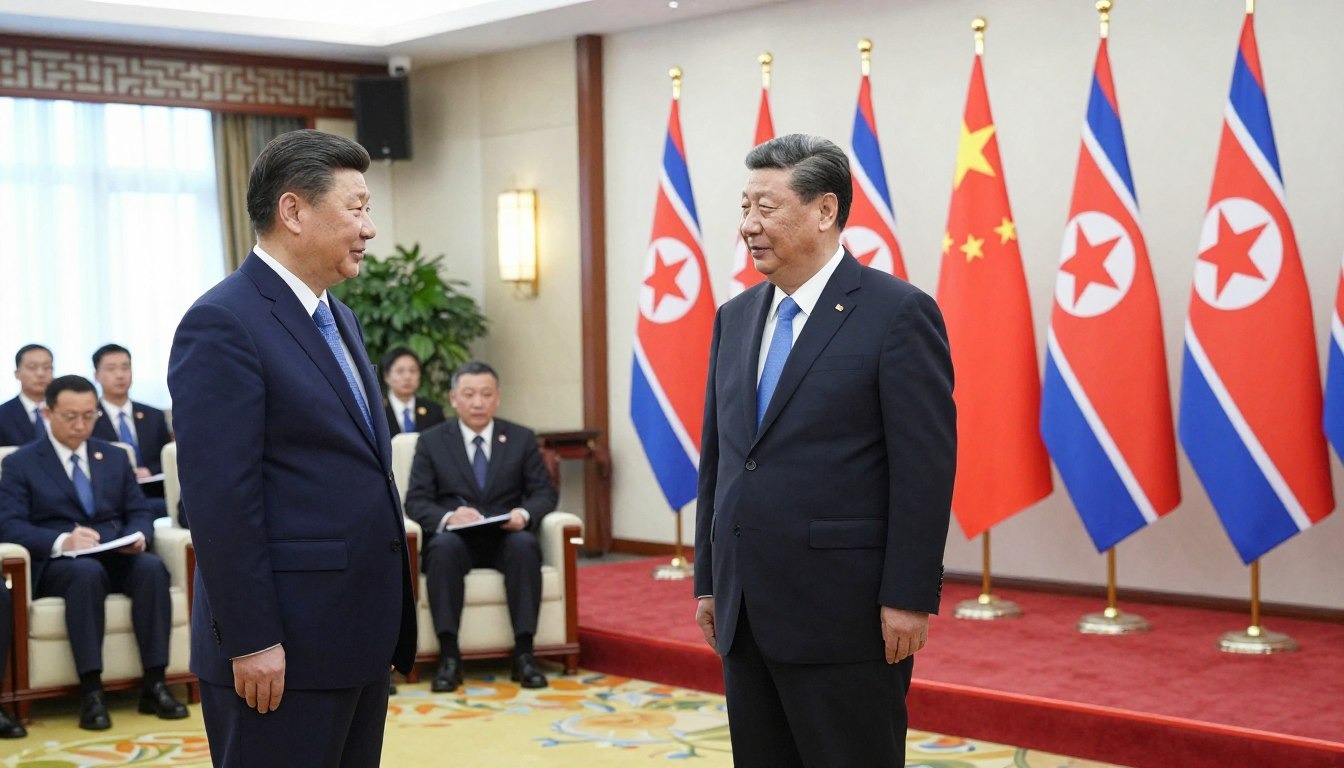
Xi Jinping Moves to Strengthen North Korea Ties in Key East Asia Diplomatic Push
We are seeing big changes in East Asia’s politics. Xi Jinping is working to make North Korea ties stronger in a big push for influence. This move is a big change from the old ways of doing things for decades.
China–North Korea relations
This isn’t just a quick reaction. It’s a thoughtful plan to build strong alliances. By looking into why China is reaching out, we can see how China–North Korea relations are changing. We want to help you understand why these changes are important for peace worldwide.
Key Takeaways
- Beijing is actively recalibrating its regional diplomatic strategy.
- The current outreach signals a departure from historical engagement norms.
- Strategic alliances are being prioritized to counter shifting geopolitical pressures.
- We observe a calculated effort to deepen bilateral cooperation in East Asia.
- These developments carry significant implications for regional security and stability.
The Strategic Pivot in Beijing
Recent changes in Beijing show a big shift from old ways. The city is now focusing more on keeping the region stable and strong. This change shows a proactive stance in handling its borders through better diplomatic relations.
Recent high-level diplomatic exchanges
There’s been a big rise in meetings between top officials from China and North Korea. These talks are a good way to see how well they work together. By looking at these meetings, we can spot important trends in their partnership:
- More visits from ministers.
- Better communication between ruling parties.
- United messages on security issues.
- Working together to keep the economy stable.
These diplomatic efforts are not just for show. They show a smart plan to stand together in a world that’s getting more complicated.
Shifting priorities in Chinese foreign policy
Beijing is now taking a more active role in the Korean Peninsula. Our research shows that keeping the border stable is seen as a critical national interest. This change is because of the need to deal with outside pressures and keep a safe area around itself.
“The evolution of our regional strategy reflects a deep commitment to maintaining peace and stability through consistent and meaningful dialogue.”
By building these diplomatic connections, China wants to achieve its long-term goals. We think this bold move will shape East Asia’s power balance for a long time. The main goal is to balance influence in the region while dealing with global expectations.
Analyzing the Evolution of China–North Korea Relations
Behind the formal state visits and public ceremonies lies a complex web of personal rapport and shared strategic goals. The political dynamics between these two nations are rooted in a long history of mutual support. This alliance remains remarkably resilient, even when faced with intense international scrutiny and shifting global alliances.
The role of personal diplomacy between leaders
Personal connections between top officials have historically served as the bedrock of bilateral cooperation. When leaders establish a strong rapport, it often bypasses standard bureaucratic hurdles, allowing for faster decision-making. Trust at the highest level acts as a stabilizer during periods of regional tension.
Several factors contribute to the strength of these personal ties:
- Frequent high-level summits that reinforce mutual commitment.
- Direct communication channels that bypass traditional diplomatic delays.
- Shared ideological foundations that simplify complex negotiations.
- A mutual understanding of the risks posed by external interference.
Aligning political objectives in a changing world
In an era defined by great power competition, both Beijing and Pyongyang are recalibrating their strategies. The current China–North Korea relations are increasingly focused on maintaining regional influence while resisting pressure from Western-led coalitions. By aligning their political objectives, both nations aim to secure their respective interests against a backdrop of global uncertainty.
We observe that this alignment is not merely reactive but a proactive effort to shape the regional order. Both sides recognize that a unified front provides a stronger bargaining position in international forums. Strategic coordination has become the primary mechanism for ensuring that their partnership remains relevant in a rapidly changing world.
Economic Cooperation and Trade Dependencies
Deepening economic cooperation is key in the diplomatic efforts of these neighbors. Their relationship is built on a strong trade and financial support system. This system is crucial for keeping the region stable.
Revitalizing cross-border trade infrastructure
Improving the physical connections between the countries is a major goal. Beijing and Pyongyang are working on better rail and bridge links. These upgrades help move goods and people, which is essential for growth.
By making logistics smoother, they aim to cut down on costs and time. This is more than just about trade; it’s about strengthening the region’s ties. These projects show the growing bond between the two nations.
Mitigating the impact of international sanctions
Dealing with global sanctions requires smart and secret economic plans. Both countries have found ways to keep resources flowing. This helps them stay stable and protect their markets from outside shocks.
“Economic resilience is the bedrock upon which our bilateral security and political goals are built.”
Energy supplies and essential goods
Keeping energy and food flowing is vital in this partnership. Beijing helps North Korea by sending:
- Refined petroleum products.
- Food to prevent crises.
- Help for keeping industries running.
Joint development zones along the Yalu River
The Yalu River is key for economic cooperation through joint zones. These areas attract investment and promote industrial work together. They aim to grow sustainably, avoiding usual trade hurdles.
These zones are a pragmatic way to develop. They boost local economies and keep both countries safe from global watch. They show that working together can lead to a better future.
Security Concerns and the Nuclear Program
The mix of regional stability and Pyongyang’s military plans is a big challenge for China. The nuclear program in North Korea is a major worry for Chinese leaders. They must balance their long-term goals with the risk of regional instability.
Balancing regional security with strategic interests
Beijing sees the Korean Peninsula as a key buffer state. But, this goal often conflicts with growing international pressure on security concerns. China wants to avoid North Korea’s collapse but also prevent a big conflict.
The impact of North Korea’s missile testing on Beijing
Pyongyang’s missile tests pose a big problem for Chinese officials. These tests lead to more U.S. and ally military presence in the area. This goes against China’s wish for a calm and stable neighborhood, making the nuclear program even harder to handle.
Managing the risk of regional escalation
To lessen these risks, China uses a careful approach. They use their economic power to encourage calm without losing their ally. By focusing on diplomatic stability, they try to manage security concerns and keep the alliance strong, even with the current military tensions.
Historical Background of the Bilateral Alliance
Looking into the historical background of their partnership shows why it’s strong today. Understanding the early years is key to grasping the China–North Korea relationship.
The legacy of the Korean War
The Korean War was a pivotal moment for these two nations. Chinese forces played a crucial role in keeping North Korea alive.
This time of war created a blood-forged alliance that both countries remember. It built a bond of trust and shared sacrifice that still guides their strategies.
Enduring ties through the Cold War era
After the war, their partnership grew stronger. The 1961 Treaty of Friendship, Cooperation, and Mutual Assistance solidified their bond.
This treaty helped them stand together against outside threats. It shows how their long-standing ties have shaped their diplomatic world.
Consistency has marked their alliance for years. Even as the world changed, their core cooperation stayed strong. This ensured they could count on each other, even when isolated.
Regional Stability and East Asian Power Dynamics
The power balance in East Asia is changing a lot. Major powers are fighting for control, making the political dynamics complex and unstable.
The Korean Peninsula is key in these changes. Beijing sees it as a crucial area for keeping long-term regional stability.
China’s influence in the Korean Peninsula
Beijing uses its special position to protect its interests. It keeps close ties with Pyongyang, creating a buffer against outsiders.
This influence goes beyond diplomacy. It’s also about economic and security ties. Beijing shapes the peninsula’s security to its benefit.
Countering the trilateral alliance of the US, Japan, and South Korea
The US, Japan, and South Korea’s growing alliance challenges Beijing’s role. China is taking steps to counter these security groups, seeing them as containment efforts.
Beijing is working to strengthen its partnerships to avoid being left out. It’s deepening ties with North Korea to weaken the trilateral alliance.
Keeping regional stability is a tricky task for everyone. We think these security interests will shape East Asia’s future for a long time.
International Reactions and Diplomatic Fallout
The strengthening of diplomatic ties between China and North Korea is causing big waves in international relations. As these two nations work together, the world is looking at how to keep peace in the Pacific differently. This change makes it hard for old alliances to stand up to new global realities.
Perspectives from the United Nations
At the United Nations, countries are worried about the partnership’s impact on sanctions. Many think it could help North Korea, making it harder to stop nuclear growth. There’s a big split between those who want strict rules and those who think diplomacy is key.
The UN talks a lot about:
- The risk of losing global agreement on enforcing sanctions.
- Worries about how this will affect regional stability.
- The hard choice between helping people and keeping everyone safe.
Responses from neighboring East Asian nations
Japan and South Korea are very cautious about these changes. For them, the partnership is a real threat to their safety. They worry that a stronger North Korea, with China’s support, could make their area even more unstable.
These countries are talking more with the US about their defense. They want to get ready for any trouble. But, the world is still split on how to handle these changes and keep regional stability safe.
Strategic Implications for the United States
We need to think about how the growing bond between China and North Korea affects our security concerns. As these two nations work together, the balance of power in East Asia is under threat. This change makes us rethink how to keep the Pacific stable.
Challenges to American containment strategies
The stronger partnership between Beijing and Pyongyang makes our containment strategies harder. China’s support weakens our sanctions. This makes it tough for us to handle regional tensions.
- Increased difficulty in enforcing maritime and trade restrictions.
- Greater reliance on regional allies to maintain a unified front.
- The need for more agile military positioning in the Pacific theater.
- Heightened risks of miscalculation during routine naval exercises.
The future of denuclearization talks
Our efforts to stop North Korea’s nuclear program through talks are tougher now. Beijing’s support for Pyongyang makes it harder for North Korea to negotiate. This makes a deal on denuclearization less likely soon.
We still want a peaceful solution, but we must face reality. The lack of agreement among big powers makes a strong stance hard. Our policy must adjust to these security concerns while keeping our allies safe.
Conclusion
The shift led by Xi Jinping marks a new chapter in East Asian politics. It shows a strong will to strengthen ties that go beyond just regional interests. This partnership is built on a shared history that shapes their bond.
Economic cooperation is at the heart of this alliance. By linking trade networks, both countries aim to stand strong against outside pressures. This move will challenge global powers in the years ahead.
This shift will shape international diplomacy for a long time. The political goals of these nations make their relationship key to regional security. We encourage you to keep an eye on these developments.
How do you think this alliance will affect your local economy? Share your thoughts with us. Your insights help us grasp the wider impact of these global changes.
FAQ
Why is Xi Jinping prioritizing the strengthening of ties with North Korea at this time?
Xi Jinping is focusing on North Korea because of a changing world. He wants to keep the region stable and counter the U.S., Japan, and South Korea’s growing influence. By strengthening ties, he aims to protect China’s border and keep a key ally.
How do the political dynamics between Xi Jinping and Kim Jong Un influence their diplomatic ties?
The relationship between Xi Jinping and Kim Jong Un is key. Their personal connection helps them align their goals. This strong bond keeps their diplomatic ties strong, even with outside pressures.
In what ways are economic cooperation and trade infrastructure being revitalized?
China and North Korea are working on trade infrastructure, especially by the Yalu River. They’re creating zones for trade and energy, helping North Korea despite sanctions.
How does North Korea’s nuclear program affect China’s strategic interests?
North Korea’s nuclear program is a big challenge for China. It raises security concerns and the risk of war. Yet, China wants to keep North Korea stable and prevent a pro-Western peninsula.
What is the historical background that sustains this bilateral alliance?
The alliance started during the Korean War, creating a strong bond. This bond, strengthened during the Cold War, shapes their partnership today. It’s why Xi Jinping is strengthening ties with North Korea.
How does the deepening of these ties impact regional stability and East Asian power dynamics?
Strengthening ties with North Korea changes East Asia’s stability. It’s a move to favor China’s interests. The Beijing-Pyongyang alliance is becoming a strong counter to the U.S. in the region.
What are the primary challenges for the United States regarding these evolving diplomatic ties?
The U.S. faces challenges like harder denuclearization talks and failing containment strategies. As China and North Korea’s ties grow, the U.S. must adjust its foreign policy to a more complex security environment.












Post Comment