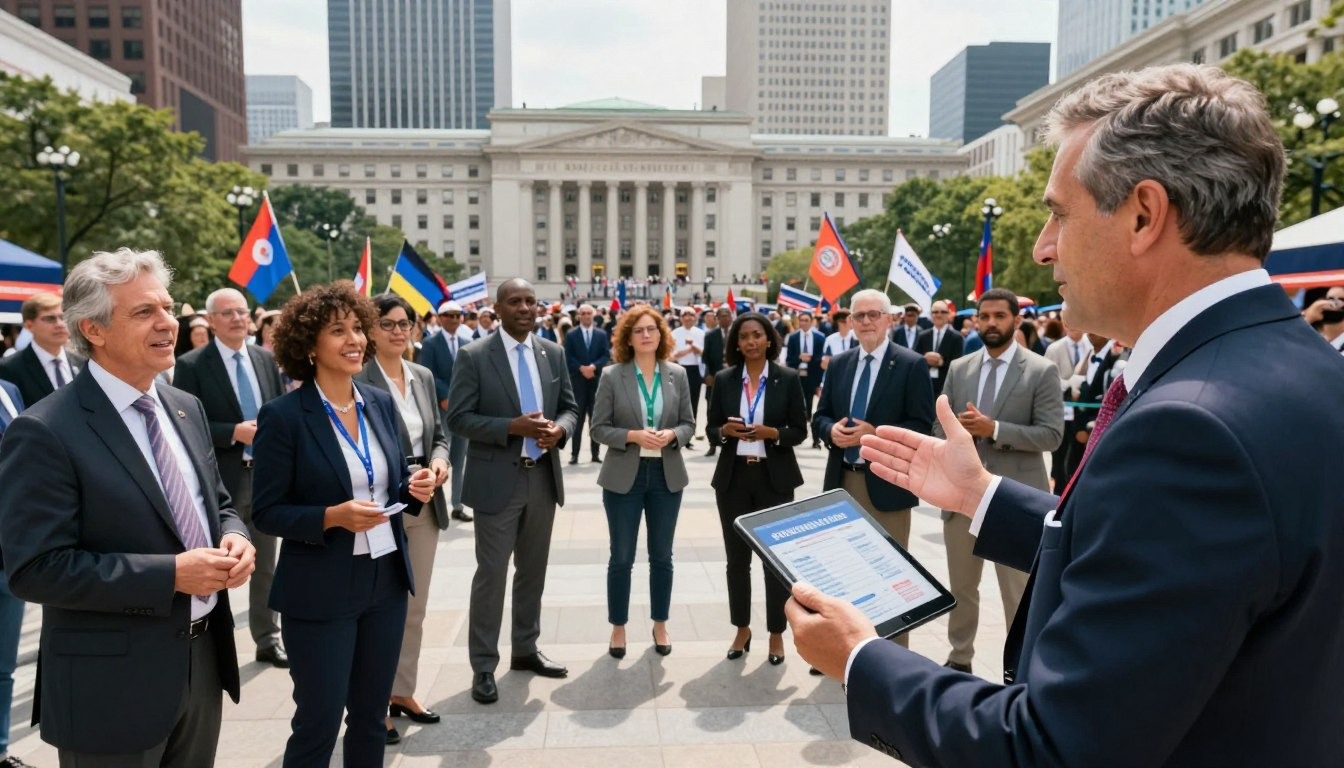
Major Elections Set to Reshape Global Political Landscape
We are at a pivotal moment in history. Many countries are voting at the same time. These major elections set to reshape global political landscape will change how we see our world.
As people vote, their choices will affect more than just their own countries. It’s important to understand these changes for the complex world we live in. By looking at these democratic processes, we can see the future of International relations.
International Politics
We aim to give you a clear view of how these changes affect Global diplomacy. It’s crucial to stay informed about these shifts. Join us as we explore the possible outcomes of these historic votes.
Key Takeaways
- Multiple nations are holding critical elections simultaneously, creating a unique historical moment.
- These democratic outcomes will significantly influence the future of global diplomacy.
- Understanding these shifts is vital for navigating modern international affairs.
- We provide a comprehensive analysis of how these votes change the world stage.
- Staying informed helps citizens better understand the complexities of current global trends.
The Current State of International Politics
The world is changing fast, making us rethink what power means. International Politics is getting more unstable as countries face tough choices. They must balance what’s important at home with their duties abroad. This often breaks long-standing alliances that kept the world stable.
Defining the Global Political Climate
Power is moving away from being controlled by one place. Countries are focusing more on what’s happening at home. This makes it hard for them to keep their promises to others. This tension shapes our global political climate, making leaders choose between what’s best for their country and what’s good for everyone.
Several key factors contribute to this ongoing instability:
- The rise of protectionist economic policies.
- A decline in trust toward traditional multilateral institutions.
- Increased competition for critical resources and technology.
- The rapid spread of information that influences public opinion.
The Interconnected Nature of Modern Governance
No country stands alone in International relations. Every big decision by a country affects others worldwide. This means local problems can quickly become global issues.
Good International relations need a smarter way of talking to each other. Countries must work together on big issues like climate change and digital rules. Understanding this helps us see how these systems impact every country and shape our future together.
The United States Presidential Election and Global Stability
The next United States presidential election is a big deal for International Politics. It’s a major source of uncertainty worldwide. The outcome will set the stage for international relations for years ahead.
Foreign Policy Implications for Transatlantic Relations
The partnership between the US and Europe is key for Western security. Changes in the White House often mean rethinking commitments and defense plans. European allies watch closely how America chooses to engage diplomatically.
Potential policy changes could affect several important areas:
- The commitment to defense pacts.
- The focus on regional security versus domestic issues.
- The way America handles diplomatic efforts in conflicts.
These changes will affect international relations and how partners work together. Keeping stability requires clear communication and a shared vision for global security.
Shifts in Trade Agreements and Economic Strategy
Economic policy is another area where domestic choices affect the world. We’re watching how changes in trade strategy might change America’s role in global markets. A shift towards protectionism or a focus on multilateral deals will change the game for many countries.
Important economic factors include:
- The future of trade agreements.
- New tariffs or trade barriers.
- The impact of American fiscal policy on global finance.
These economic shifts will change the International Politics landscape. Understanding these changes is key to navigating today’s global economy.
European Parliamentary Shifts and the Future of the Union
We are at a crucial moment in European history. Shifting parliamentary dynamics are reshaping the continent’s future. Europe is going through a complex transition that could change the Union’s established order. These changes are critical for the future of global affairs in the next decade.
The Rise of Nationalist Movements in Europe
Nationalist movements are becoming more popular across Europe. They challenge the long-standing consensus that has kept the bloc together. These groups focus on national sovereignty over centralized decision-making, causing tension in the European Parliament.
This shift shows a broader desire among voters to control foreign policy decisions locally.
“The strength of the Union lies in its ability to adapt to the changing voices of its citizens, even when those voices challenge the status quo.”
This rise in nationalism affects global diplomacy too. As these movements grow, they make the Union rethink its international relations. Key areas of tension include:
- The balance between national interests and collective security.
- The approach to cross-border migration and border management.
- The prioritization of domestic economic protection over open trade.
Impact on EU Legislative Priorities
The changing parliament will shape future legislative priorities. We expect future policies to be more protectionist. This could change the Union’s role in global affairs.
We need to watch how new coalitions form and their impact on foreign policy.
The Union’s influence depends on balancing internal shifts with global commitments. The next years will test European institutions’ resilience. The decisions made now will impact the international community for a long time.
India’s Democratic Mandate and Regional Influence
India is now a key player in global affairs. Recent votes have given it a clear direction to grow its influence. This stability is making India more active and bold in its foreign policy worldwide.
Geopolitical Positioning in the Indo-Pacific
India is changing the Indo-Pacific’s security landscape. It’s doing this through partnerships and sea cooperation. By building strong ties with other countries, India keeps its role as a key player in stability.
This move is crucial for keeping power balanced in the sea. India’s strategy includes several key areas:
- Maritime Domain Awareness: Improving watch to safeguard key trade paths.
- Strategic Alliances: Strengthening defense ties with democratic nations.
- Regional Connectivity: Investing in projects to boost economic ties.
- Crisis Response: Leading in humanitarian work during emergencies.
Economic Growth and Global Diplomatic Standing
India’s growing economy is boosting its diplomatic power. As the economy grows, India has more influence to shape global rules. This is key for its long-term goals in global affairs.
India’s foreign policy is closely linked to its economic growth. By using its large market and tech, India is gaining a voice in big financial groups. This change shows India’s shift from a regional to a global player.
Latin American Political Volatility and Economic Ties
Political instability in Latin America is changing how we see its role in global affairs. The continent is facing a tough time with its democratic systems. It’s important to understand these changes to predict the future of the Western Hemisphere.
Regional Trends in Governance and Policy
Recently, political divisions have grown across the region. Countries are trying to balance public demands with keeping their systems stable. This leads to quick changes in foreign policy as new leaders set new goals.
These changes affect more than just local politics. They impact the whole region. When governments turn more inward or radical, it changes everything. This makes it hard for other countries to keep up with diplomatic efforts.
The Role of International Trade and Investment
Economic ties are key to Latin America’s relationship with the world. Even with political ups and downs, the need for foreign investment keeps countries working together. Countries that open their markets tend to handle global challenges better.
Trade agreements help keep things stable in a shaky world. They create strong economic bonds. These bonds are crucial for keeping the region connected to the world.
African Elections and the Changing Face of Governance
We are in a new era of African governance, with big elections coming up. These events are key for the continent’s future. Countries are focusing on making sure democracy leads to real progress, not just quick fixes.
Democratic Transitions and Institutional Stability
Managing democratic changes is a big deal for leaders in Africa. Success often comes from making local institutions stronger and following the constitution. This builds trust with people and other countries.
By focusing on these areas, countries create a stable place for growth. This is crucial for lasting peace and making sure people’s voices are heard in decisions. This move towards strong governance is a big part of modern global diplomacy.
Foreign Investment and Resource Diplomacy
Foreign investment and resource diplomacy are changing Africa’s economy. Countries are using their natural resources to make mutually beneficial partnerships with the world. These strategic engagements are key for good diplomatic relations.
Success also depends on working well with neighboring countries. By doing this, countries can attract more investors. This teamwork is vital for dealing with global diplomacy and a bright future. The way these diplomatic relations evolve will shape Africa’s place in the world.
The Impact of Populism on Global Diplomacy
We are in a time of change, where populist ideas are changing how countries talk to each other. This change is causing problems in the way diplomatic relations work. As more people focus on their own country, the desire for international agreement is fading.
How Populist Rhetoric Alters International Relations
Populist leaders often put their country first, even if it means going against global security. They question the need for alliances that have kept the world stable for years. Their view of international relations as a competition makes it hard to work together on big issues.
This change is affecting many areas of government:
- More doubt about global trade agreements.
- More focus on deals just between two countries, which might help their own interests.
- Less money for international groups and peace efforts.
- More aggressive speeches to win votes at home.
The Erosion of Traditional Diplomatic Norms
The rise of populism has made countries less likely to follow diplomatic protocols. Before, cross-border cooperation was based on respect and clear rules. Now, leaders who like to shake things up are becoming more common.
When countries stop following the usual rules of openness and talking things through, working together gets harder. This makes it tough to build trust for lasting partnerships. It’s important to understand these changes to see how diplomatic relations are doing in our world.
Economic Policy Shifts and Cross-Border Cooperation
We’re seeing big changes in how big economies balance protectionism and trade. This change is changing how countries work together, making it harder to cooperate across borders. The old ways of working together are under pressure in today’s market.
Protectionism Versus Globalized Trade
Many governments are now focusing on local jobs and safe supply chains. This move towards protectionism is causing problems with old trade partners. It’s making it tough for countries to work together in a global economy.
The debate is now about who controls economic policies. When countries close their markets, they weaken global growth. This makes us think about how to keep the economy stable in a world of rising nationalism.
The Future of International Financial Institutions
International financial groups like the IMF and World Bank are at a turning point. They’re facing challenges from the countries that helped start them. These groups need to adapt to a multipolar world to stay important in the next ten years.
If they can’t help countries work together, their power will drop. The success of diplomatic relations depends on these groups. They aim to keep global finance systems working for, not against, cross-border cooperation.
Security Alliances and Foreign Policy Realignment
The world is moving towards a multipolar structure, and security pacts are changing. The old geopolitical landscape with one dominant power is fading. Now, nations are adjusting their defense plans to deal with a more complex world.
This change makes us rethink the basics of world governance. As alliances evolve, old stability systems face new challenges. This is due to emerging threats and shifting priorities.
The Evolution of NATO and Regional Security Pacts
NATO is still key for collective defense but needs to update its approach. It’s now tackling cyber warfare, energy security, and non-state threats. These changes help NATO stay relevant in a world with digital and decentralized threats.
Across the globe, regional security groups are also changing fast. Countries are forming smaller, quicker coalitions for local issues. These flexible partnerships offer fast responses to local problems without big organization delays.
New Alliances in a Multipolar World
New alliances are reshaping the geopolitical landscape. We see groups focusing on both economic and military ties. These partnerships often skip traditional leaders, offering new paths for influence and security.
This shift has big implications for world governance. With power spreading out, international bodies face new challenges. We must see these new alliances as lasting parts of our changing world.
Challenges to Democratic Institutions Worldwide
We are facing a critical time where democracy’s core is being tested. Modern challenges threaten the integrity of elections. They call for a strong commitment to world governance that values transparency and accountability.
Combating Disinformation in Election Cycles
Disinformation is a major tool for those trying to disrupt the geopolitical landscape. False stories are spread to undermine trust in elections and institutions.
“Democracy is not a state of being, but a process of becoming, and it requires constant vigilance against the forces that seek to undermine truth.”
To fight these threats, we need to improve digital literacy and fact-checking. It’s crucial to protect voters from misinformation, so they can make informed choices.
The Role of Civil Society in Protecting Democracy
Civil society groups are the backbone of a healthy democracy. They keep power in check and make sure citizens’ voices are heard.
Their role is key for several reasons:
- They promote civic education and voter turnout.
- They watch over government actions for abuse.
- They push for policies that protect human rights and equality.
The active role of civil society is essential for world governance. By encouraging engagement, we can safeguard our institutions. This ensures a stable geopolitical landscape for the future.
Conclusion
The upcoming votes will change the world’s politics forever. They will affect trade and security agreements.
These elections are crucial for the global scene. The choices in the U.S., India, and Europe matter a lot.
We’re keeping a close eye on these changes. Knowing how the world is governed is key in today’s world.
Stay updated with us as we follow these events. Your interest helps us understand our future better.
FAQ
Why are these major elections set to reshape global political landscape considered a historical turning point?
Many key countries are voting at the same time. This rare event will change how countries work together globally. The leaders chosen will guide us through a shift from one world power to many, affecting trade and the environment.
How does the United States presidential election influence global stability and transatlantic relations?
The U.S. election will impact foreign policy greatly. It will decide how the U.S. works with Europe and NATO. The U.S. is a key player in keeping the world stable, and a change in leadership could change how we all interact.
What impact do nationalist movements in Europe have on world governance?
Nationalist groups in Europe, like the National Rally in France, are changing the EU. These changes might slow down cooperation between countries and shift EU priorities. Understanding these changes is key to knowing how the world will be governed in the future.
How is India’s democratic mandate affecting its global diplomatic standing?
India’s recent vote has made it a major player. Under Narendra Modi, India is growing its economy and influence in the Indo-Pacific. This new role makes India a bridge between the South and the West, changing global politics.
In what ways does populism alter the traditional norms of international relations?
Populism focuses on national interests over global cooperation. This shift erodes traditional diplomacy, which has kept peace and promoted trade. Populist leaders are changing how countries interact, making diplomacy more transactional and unpredictable.
How do economic policy shifts toward protectionism impact cross-border cooperation?
The debate between protectionism and global trade is ongoing. As countries favor their own industries, working together becomes harder. This challenges global institutions and makes cooperation more difficult as competition grows.
What role does resource diplomacy play in African democratic transitions?
Elections in Africa, like in South Africa and Ghana, are changing governance. These changes are crucial for attracting investment and managing resources. The stability of these countries is key for global diplomacy and green energy.
How can civil society help protect democratic institutions from disinformation during election cycles?
Fighting disinformation is crucial for democracy. Civil society is vital in keeping elections fair by holding leaders accountable and checking facts. Strengthening these efforts is essential to protect democracy from threats.







Post Comment